Home Blog Page 19

Simple Science for Kids

0

Science and Kids: A Match Made in Heaven

Since science is everywhere, every day of the year, it’s easy to make science an everyday activity in the daycare setting. Moreover, kids are natural scientists by virtue of their curiosity, unlimited imagination, and love for exploration, making science and kids a match made in heaven.

Science in Daycare

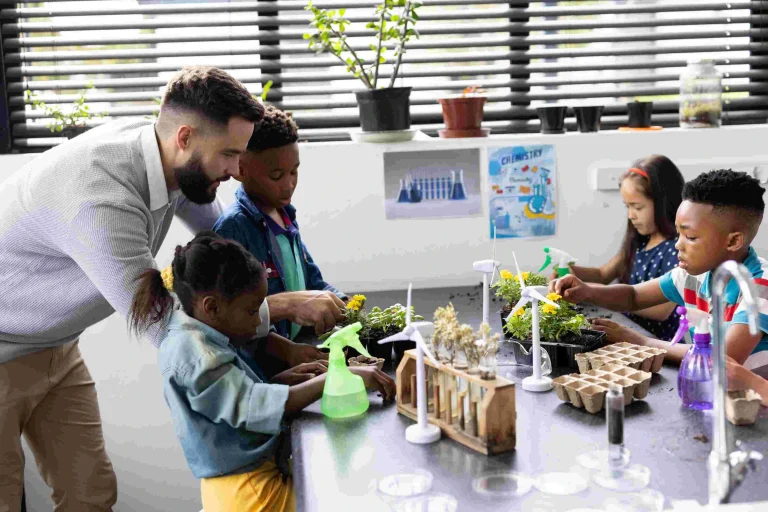
You probably don’t even realize it, but science happens all the time inside the daycare, outside the daycare, and in the daycare playground. By helping kids pay attention to and ask questions about their surroundings and by providing them with some basic scientific vocabulary, daycare staff can go a long way in developing scientific skills in children and in helping them learn about how the world works.

Teaching Kids Scientific Concepts

Here are some scientific concepts, scientific tools, and science-related phenomenon which crop up all the time in the realm of children, making it easy to teach science to kids:

•- Boiling and Freezing

•- Water versus Ice

•- Cause and Effect

•- Bubble Activities

•- Magnifying Glass Experiments

•- Paint Color Mixing

•- Trees, flowers, bugs, insects, and how seeds and plants grow

•- Healthy Eating (nutrients, fruits, vegetables)

•- Liquids and Solids

•- Cooking (following recipe directions, measuring ingredients, setting oven temperature, etc.)

3 Simple Science Experiments for Kids

Here are some easy science activities appropriate for preschoolers and young children:

•1) Watch a Potato Grow: Fill a jar with water. Take a sweet potato (or a regular potato) and stick four toothpicks into the middle of the potato. Place the potato inside the jar such that the toothpicks keep half of the potato above water and half of the potato submerged below the water. Place the jar in a sunny spot and watch (over the course of a few weeks) as the potato sprouts roots and shoots; using a ruler, measure the roots as they grow.

•2) Sink or Float: This is a classic science experiment for kids of all ages which teaches the concept of buoyancy and the concepts of heavy vs. light and sink vs. float. All you need is a large bowl of water and a handful of household objects (i.e. toys, cans, various sizes of wood, a small rubber ball, coins of money, etc.) Ask the kids to predict which items will sink and which will float; after they observe the results, have a discussion about and explanation of any surprises (for example, large items which float) and come up with some scientific conclusions.

•3) Change the Color of Celery: This fun science experiment is a children’s favorite! All that is needed are some celery stalks, a glass of water, and some food coloring. Simply add several drops of food coloring to glass of water and place a celery stalk inside the glass. Within a matter of a day or two, watch as the celery stalk absorbs the water (much like a tree root drinks up rain water) and gradually changes into the color of the food coloring! To create even more science “magic” and for nice visual effect, repeat the experiment in several glasses of water, adding a different color of food coloring to each; then observe as a rainbow of celery stalk colors grow.

Kids’ Science Activity Resources

Whether you are looking for science activity ideas for kids or want to find answers to some the many science-related questions children ask you every day, there are many free children’s science resources available to you, including the local library, children’s encyclopedias, the Internet, and more. If you’re looking for answers about plant growth, consider taking the daycare on a field trip to a nursery; if the kids have questions about the moon and stars, enjoy a daycare outing to the planetarium, where an experienced guide can answer of the kids’ science questions.

Remember that in the world of science, asking questions is far more important than the answers (and often there is no one ‘right’ answer in science). Further, asking open-ended questions encourages kids to think for themselves rather than give one-word answers to closed questions. Encourage children to hypothesize, to predict, and to discuss what they think will happen next in any science activities. Afterwards, have a discussion about what they learned and introduce an arts-and-crafts activity related to the science project.

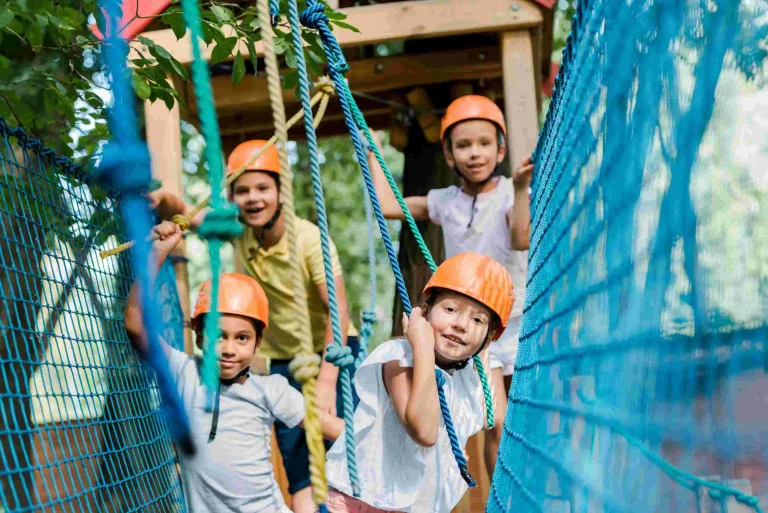
Kids Are Scientists

0

Children: Born Scientists

With their natural curiosity, special wonder, and proclivity to explore, preschoolers and young children are born scientists! Always eager to ask questions, ready to get their hands dirty and use all their senses to explore their environments, most children are born with many of the attributes necessary to become a good scientist. Kids love to test out their ideas and to let their imaginations soar. As they do so, they make scientific discoveries about the world every day, without even knowing it! As daycare caregivers and daycare staff, you can do a lot to encourage children’s inborn scientific inclinations and help them learn about basic areas of science.

Kids’ Scientific Skills

Many of the skills we marvel about in children are the same skills used in actual scientific investigation, such as:

•- Observation

•- Comparison

•- Critical Thinking

•- Hands-On Experimentation

•- Communication

You can enhance kids’ grasp of science by encouraging them to ask questions, to compare information, to predict results (what do you think would happen if…) and to express their thoughts and ideas.

Learning Science with Children

As you search for science activities and science ideas for children, keep in mind how children learn best and use these means to your advantage. Whenever possible, use all five senses. Kids’ science experiments are especially fun since they tend to involve a lot of visual “magic,” which children are in awe of. When you add in taste, touch, sound, and smell, kids fall in love with science and clamor for more. A good idea is to connect kids’ science projects or science activities to topics currently being discussed or learned about in the daycare setting, such as color, taste, growth, nature, gravity, the solar system, and more. And don’t forget that science isn’t always about strict learning; some children’s science experiments are simply fun!

Ask Open-Ended Questions

One of the most important aspects of teaching kids science is asking open-ended questions. Remember, we want to teach kids to think on their own rather than provide them with all the answers, and science is the perfect medium for developing the skills of inquiry, making observations, and building understanding. You can incorporate science into everyday daycare routines by asking open-ended questions such as:

•- Why did you do it that way?

•- Why/how do you think that happened?

•- What do you expect/think will happen next?

Remember: There’s no one ‘right’ answer when you ask open-ended question, rather the goal is to generate many possible answers.

Science in the Daycare Setting

You may not realize it, but daycare settings are already bursting with opportunities to teach science to kids. It’s safe to say that daycares and science go together! Here are but a few of the hundreds of scientific concepts you run into every day, which can formally be introduced to children by offering them some basic scientific vocabulary:

•- Weather/weather changes

•- Insects and bugs (ants, worms, crickets)

•- Butterflies and Caterpillars

•- Textures such as hard, soft, bumpy, rough, smooth, jagged, prickly, and more

•- Colors and shades (including how to mix colors, primary colors, and how rainbows are formed)

•- Shapes

•- Movements (under, over, through, around, fast, slow)

•- Weight (heavy versus light)

•- Buoyancy (Which objects float or sink)

•- Gravity (What happens every time you throw a ball in the air?)

•- Nutrients and Healthy Eating

•- Plants (trees, leaves, flowers, weeds, and more)

•- Categorize fruits and vegetables/learn how seeds grow

•- Temperature (hot, cold, freezing, boiling, tepid, warm, etc.)

•- Changing of the seasons

•- Time changes

•- Solids, Liquids, and Gases

•- Cooking Measurements

Key Components of Kids’ Science Experiments

Remember to include the following key components in science experiments with kids:

•1) A question/Investigative element

•2) Prediction of outcome

•3) Scientific vocabulary

•4) Hand-on experiment or activity

•5) Discussion

•6) Drawing Conclusions

As you can see, science is all around us every day. Since kids are scientists by their very nature, all you have to do is provide them with the opportunity to question, observe, explore, evaluate, and conclude – just like professional scientists do!

Kids’ Outdoor Activities

0

Kids’ Outdoor Activity Ideas

Looking for some great ideas for kids’ outdoor activities? Then you’ve come to the right place! Keep in mind that these are merely a number of suggestions from literally hundreds of kids’ activities and kids’ activity ideas which you can make up on your own, read about, research online, or amend to suit the ages, skills, and capabilities of the children involved. This includes anything from playing baseball to climbing on the jungle gym.

Some of these outdoor activities can be enjoyed indoors too, but for the most part they are intended for use in the fresh outdoors (weather permitting, of course), where kids can breathe in fresh air, enjoy the rewards and benefits of mother nature, and engage in healthy physical activity and/or mental stimulation.

Kids’ Activities Main Ingredients

The following are the main ingredients for the success of children’s activities outdoors:

•- Keep it fun

•- Keep it interesting

•- Keep it simple

•- Keep it safe

Keep it Simple

Children’s outdoor activities should not be complicated. There are many outdoor games, outdoor races, outdoor treasure hunts, outdoor crafts, and outdoor nature games, and other outdoor kids’ activities that are easy to set up (taking mere minutes), easy to explain, easy to implement (requiring only basic supplies/equipment), and easy for kids to understand. In fact, the simpler the concept, often the greater success!

Easy and Fun Outdoor Children’s Activities

Here are some entertaining ways for children to enjoy the great outdoors, some creative outdoor children’s games, some fun kid’s outdoor crafts, and some easy kids’ outdoor activities:

1) Listen to the Sounds

Appropriate for daycare children of all ages, simply seat the children in a circle and ask them to close their eyes; then ask them to identify the sounds they hear. At first, kids’ hearing tends to be limited to the most obvious sounds, such as a bird chirping or the sound of an airplane flying overhead. Gradually, they will be amazed as they become attuned to many more outdoor sounds, such as a dog barking, a car driving by, the honk of a horn, the rush of the wind, and more.

2) Chalk Art

This classic children’s outdoor activity never grows old! Using a sidewalk, driveway, parking lot, or large canvas, let the kids draw to their heart’s content using sidewalk chalk. Each child can draw his own picture, or you can collaborate and create a group masterpiece or collage. Teach the kids how to play “Hopscotch,” have them leave their mark by lying down and tracing each other’s silhouettes, or make up your own chalk art activities!

3) Board Surfing

All you need for this favorite kids’ outdoor activity is a wooden board or similar sturdy block about six feet long and eight inches wide. To create the surfboard or balancing board, place a block or brick under each end of the board, thereby raising it off the ground (to a safe height for the children involved). The kids then take turns trying to walk, skip, jump, and hop across the board, as well as balancing on one foot, standing with their eyes closed, et cetera. Besides generating loads of laughter, kids will improve their coordination skills and confidence levels. You can also use this outdoor activity to teach kids about helping on another, accepting differences in their levels of talent, and about taking turns.

4) Outdoor Picnic

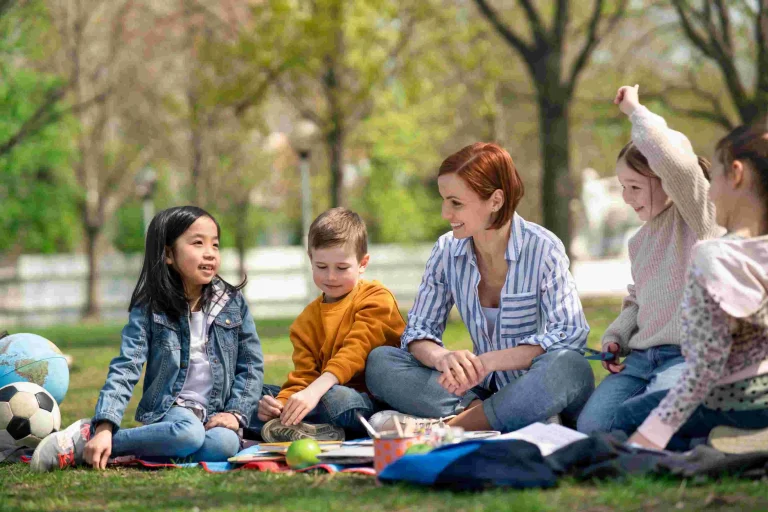
What could be easier or more fun than an outdoor picnic with kids? Simply have lunchtime or snack time outdoors. Whether you sit on the ground, on a blanket, or at a picnic table, having a picnic lunch or even a picnic day (complete with outdoor races, games, and prizes) outdoors is sure way to bring lots of smiles to a group of children. For added fun, bring out some Frisbees and balls, and don’t forget the portable radio or MP3 player to play some favorite kids’ musical tunes.

5) Nature Walking/Nature Exploring

Even a short walk in the park, around the block, or in the playground is an excellent opportunity for kids to discover their “inner nature explorers”! As you walk, ask the how many nature items they can identify (birds, bugs, flowers, weeds, trees, smells, etc.), or have the children collect leaves, twigs, stones, or bottle caps to use in a nature arts-and-crafts activity later on. If a large group of children is involved, but sure a responsible caregiver takes up the front and the rear of the group, and pair the kids into “buddies” who they are to stay with and look out for during the outing. Kids love the feeling of being responsible and will rise to occasion!

Hopefully, these simple and inexpensive kids’ outdoor activity ideas have inspired you to come up with some of your own! Have fun outdoors with the children in your care, and don’t forget that safety comes first.

Make Musical Instruments

0

Musical Arts and Crafts

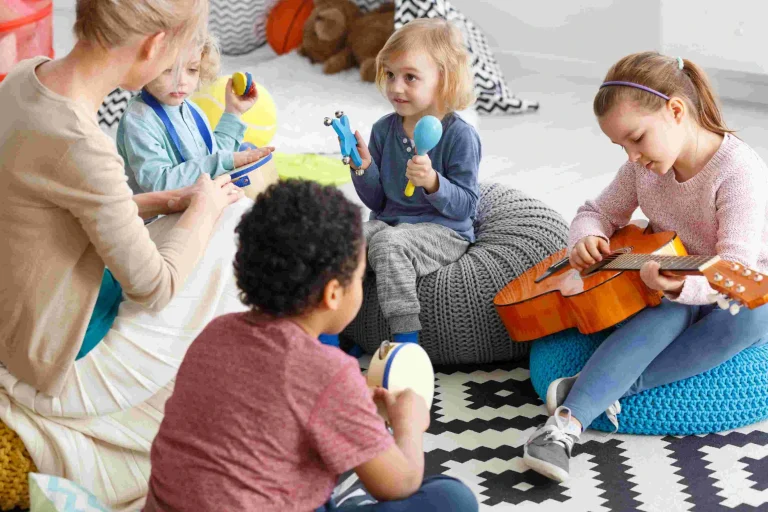
With children’s affinity for music and children’s love of arts and crafts, the activity of making musical instruments is a natural winner! There are literally thousands of “how to make musical instruments” instructions, videos, ideas, innovations, and step-by-step guides available for free on the Internet, including entire websites dedicated to the topic using everyday materials to make music. Alternatively, take the daycare on a field trip to the library to check out scores of books on making simple, easy, and fun musical instruments of all kinds.

Benefits of Making Musical Instruments

Music has a long list of beneficial effects on children, whether they are just listening or actively participating in singing, dancing, clapping, counting, or shake-shaky-shaking. Not only do children love to touch and try out musical instruments, but through this act hidden talents often emerge and new parts of children’s personalities are revealed. As kids tap to the beat of the music, they tap into a deeper part of themselves which shines through.

Types of Homemade Musical Instruments

With some very basic materials and a large helping of creativity, there is almost no end to the variations of musical instruments you can make from scratch. Some of the most popular do-it-yourself musical instruments include: tambourines, maracas, trumpets, box guitars, drums, kazoos, flutes, shakers, chimes, horns, cymbals, xylophones, and many more.

How to Make Musical Instruments

Below are some instructions for making musical instruments. For a closing activity, form a marching daycare band featuring children and their favorite musical creations. Kids and staff alike will enjoy hours of fun jamming to the kids’ favorite tunes.

Tambourine

Supplies:

  • Two heavy-duty paper plates
  • Hole-puncher
  • Stapler or glue
  • String
  • Crayons, stickers, curling ribbon (optional)
  • Little Bells

Staple/glue two paper plates together face to face. Using a hole-puncher, make holes around the plate edges, using string to tie bells to the holes. In the same holes, tie on pieces of curling ribbon and curl with scissors. Decorate as desired and shake to play.

Horn

Supplies:

  • Empty paper towel roll
  • Wax paper
  • Pen
  • Rubber band

Cover one end of the paper towel roll with waxed paper and secure with a rubber band. Using a pen tip, punch a row of holes along one side of the paper towel roll. To play, belt out a tune into the open end of the horn. (Decorate horn as desired)

Cymbals

The simplest way to make cymbals is to strike together two same-sized pot covers. To decorate, tie a piece of curling ribbon to the pot handles.

Xylophone

Supplies:

  • Mixing spoon
  • Several tall glasses or jars
  • Water
  • Food coloring (optional)

Fill the glasses/jars with varying amounts of water and arrange in increasing/decreasing order. To play, gently strike glasses/jars with the mixing spoon, noting that less water produces higher pitches and more water produces lower pitches. For a decorative effect, add a few drops of food coloring into the water, using a different color for each glass/jar.

Box Guitar

Supplies:

  • Rubber bands
  • Empty shoe box
  • Ruler or stick

Stretch rubber bands around an open shoe box, attaching a ruler/stick to the back of the box to use as the arm of the guitar. Strum or pluck the rubber bands to play.

Shakers

Using various sized bottles (to produce different sounds), fill each bottle about a quarter of the way with rice or dried beans/lentils. Secure lids tightly and shake away!

Wrist Jangles

This simple and fun musical instrument is perfect for younger daycare children, who will love marching, jumping, and skipping to the sound of musical bells. String bells onto a piece of ribbon 6-8 inches in length, tying knots between the bells. Loosely secure to a child’s wrist.

Finally, to decorate homemade musical instruments, keep a supply of basic arts-and-crafts materials on hand, and don’t forget to have a camera standing by to preserve the final products for eternity!


Kids & Music Go Together

0

Infants and Music

From the time they were infants, children naturally sway and bob to the sounds of music. You are probably familiar with the myriad of modern-day classical music products made for babies still in the womb, based on the theory that early exposure to the classics will produce brighter, smarter, and more academically inclined children. There are even scientific explanations for the relaxing effects of music on infants and children. Thus it is clear that from a very young age, children and music go together in ways we have yet to discover and understand.

Children’s Natural Expression

Music lessons for kids have numerous benefits; music has been shown to draw out normally withdrawn children, have a calming effect on aggressive and loud children, and peak the interest of seemingly disinterested and uninvolved children. Moreover, music allows children to express themselves in new and unique ways – whether singing, playing an instrument, tapping a foot, swaying a hip, or waving a hand to the beat of the music.

Music Educates and Entertains

Through music children have an opportunity to learn about sounds, sequencing, creativity, self-discipline, and to improve their attentive-listening and memory skills. Daycare musical activities call for some form of active participation from children rather than mere passive listening.

Music and Daycare: Getting Children Involved

To avail children of the benefits of music, make music an integral part of the daily daycare curriculum. The quality of singing or instrumentation is not important; children will be enriched through the simple act of getting involved. Here are some ideas:

•- Teach new songs by singing one line and having children repeat after you

•- Choose interactive songs which require children to ‘answer back’ or perform some sort of physical action

•- Add musical instruments to peak children’s interest

•- Make your own musical instruments (there are myriads of homemade musical instrument ideas and free instructions available on the Internet)

•- Choose songs with upbeat or steady beats that are easy for kids to follow

•- Play music in the background as children engage in other activities

Fun Music Activities for Kids

Here are a few ideas to introduce music into daycare:

Movement Songs

Movement songs never grow old and are a children’s favorite. Mix classics such as “I’m a Little Teapot,” “If You’re Happy and You Know It,” and “Itsy Bitsy Spider” with more contemporary movement songs, or create your own musical movements to well-known tunes, to made-up lyrics, and to tempos and rhythms best suited for the children or activity involved.

Make Musical Instruments

Do a musical instrument making arts-and-crafts activity. Once children have completed creating the musical instrument of their choice from simple everyday materials, turn the daycare into a marching band, as the children proudly display their handmade instruments and march to the beat of their own drums and tunes.

Start and Finish the Day with Music

Make music an integral part of the daycare’s routine, beginning with warm-up stretching exercises in the morning, and ending with a clean-up song or a selected song-of-the-day before pickup time.

Interpret the Music

Play a wide variety of short music selections, asking children to interpret the music by drawing, painting, tapping, or dancing to the beat and sounds they hear.

Bell Dance + Musical Freeze

Combining two classic children’s musical games, kids go nuts for the following hilarious musical activity:

•- Attach a small bell to each child’s shoe or foot

•- Start the music

•- Children dance free-style to the beat of the tune

•- Stop the music

•- Children must freeze on the spot, standing in whatever position they were in when the music stopped

•- The last “bell” heard dancing or moving is asked to leave the game until the next round

For more musical activity ideas for children in daycare, do a search online or visit your local library. You can even plan a group field trip to the library and have the children look up musical games and craft ideas.

Plan a Daycare Picnic

0

Once in a while it’s fun and healthy to take the daycare on an outing to the great big outdoors. While field trips are more educational in nature, and while trips to local playgrounds and parks are always enjoyable, daycare picnic outings are special in their own right

Children’s Picnics

There is nothing quite like a children’s picnic, with its one-of-a-kind combination of a picnic meal, picnic games, prizes, fun in the sun, laughter, and in all likelihood some bruises, bites, and cuts mixed in. Daycare picnics are a great way to celebrate the arrival of spring and summer, to bring to life and explore themes of nature discussed in daycare, to teach children sportsmanship and game activities, to release stress and pent-up energies, and for daycare staff and children to be entertained.

Daycare Picnic Planning

The best daycare picnic ideas are participatory. Planning a picnic outing together with daycare children makes the picnic their own creation, allowing their talents, creativity, and enthusiasm to shine through, and to possibly draw out more introverted and normally shy children. While all daycare outings are subject to certain rules of behavior related to conduct and safety, a picnic excursion should keep rules to a minimum and freedom to a maximum.

Picnic Menu

The picnic menu is one area where kids can really get involved. Let the children decide what type of food they want to bring on “their” picnic, whether it be a pot-luck picnic, where every child brings a different dish, a themed picnic (i.e. Oriental food, Mexican food, organic foods, favorite foods, foods of a certain color, et cetera), a just-desert picnic, or an “anything goes” picnic menu.

You will be amazed at how organized and opinionated younger children can be when asked for their ideas! Similarly, which children emerge as the “leaders” and the “followers” might surprise you…

Picnic Activities

The highlight of a picnic is the slew of games, activities, and optional prizes involved. There is no end to the list of great picnic activity ideas for children. Once again, the daycare children can help plan some of the picnic games and races, or you can leave this area in the hands of daycare staff and surprise the children.

Picnic Activity Ideas

Here are some simple, inexpensive, fun-loaded ideas for picnic activities:

Bean Bag Toss

There are boundless bean-bag-toss games, contests, and races to choose from, or you can make up your own bean-bag activities. Here are a few to get you started:

•- Throw bean bags into empty boxes placed at varying distances from the starting line, awarding points to the highest scoring individual or team

•- Draw a target (i.e., a bulls-eye, clown face, face of a daycare staff member) in the center of a large sheet and hang between two trees. The purpose of the game is to throw the beanbags and hit the target on the nose. Kids will LOVE the opportunity to “hit” someone they know, and this simple picnic activity will generate peals of laughter from all

Frisbee Throw

Using any variations on the classic Frisbee game, have ample Frisbees available, allowing kids to take multiple turns without long waiting periods. See who can throw the Frisbee the furthest, catch a Frisbee the greatest number of times, or hit a target with a Frisbee.

Obstacle Courses/Relay Races

True, tried, and tested, you can’t go wrong with a classic obstacle course or stream of relay races designed to suit the kids’ age level, skill level, and personality. Featuring a great blend of physical activity and fun, kids will love going over, under, on top of, through, and around items placed in their pathway, or racing for the finish line as you cheer them on. You will marvel when children break through their own limitations and rise to the occasion physically, mentally, and emotionally.

Of course, there may be surprises in the opposite direction too, since competition tends to bring out the worst in certain children; but any show of unsportsmanlike behavior can be used as an opportunity for growth and education. And don’t forget to bring a camera to Picnic Day to capture all of the highlights – the thrills, the spills, the tears, and the laughter!

Bubble Fun

0

Fun Bubbles

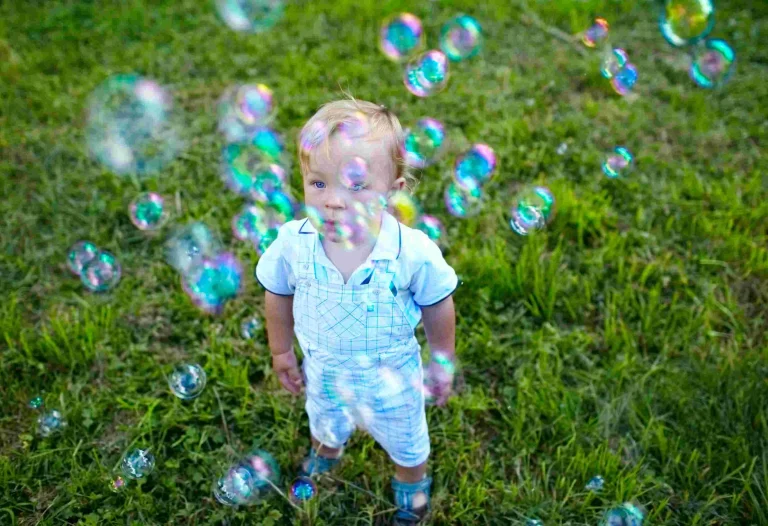
Nothing says “fun” more than bubbles! Children of all ages and especially daycare-aged children are fascinated by the art, craft, and wonders of bubble making, bubble blowing, bubble watching, and bubble innovating! For flexible, reliable, and inexpensive fun year-round and especially in the summertime, here are some bubble activity ideas for your daycare. The kids will bubble over with excitement as they mix up their homemade bubble solutions.

Fascinating Bubbles

Soap bubbles and bubble products have continued to mesmerize and fascinate users and viewers since the day bubbles were discovered! Daycare children will delight for hours in blowing bubbles through an array of creative “bubble blowers,” watching bubble-blowing demonstrations, catching bubbles, popping bubbles, and having bubble-blowing competitions. There is something magical, hypnotizing, and enthralling about effervescent, vibrant, bobbing bubbles floating mid-sky that leaves its viewers spellbound. For an activity which will put an end to boredom and draw out even the most introverted, shy, and quiet daycare children, say hello to bubbles and bubble activities!

How to Make a Basic Bubble Solution

While there are a few variations on making a bubble solution, the basic recipe is the same. Here is one simple recipe for making a bubble mixture:

  • 1 part liquid dish soap
  • 2 parts water

For colored bubbles, add:

  • 1 part washable paint

Another recipe for homemade bubbles is as follows:

  • 1 cup dishwashing soap
  • 6 cups of water
  • 1 tablespoon of glycerin (makes stronger bubbles for bubble-blowing activities)

For colored bubbles, add:

  • A few drops of food coloring

Teach Daycare to Blow Bubbles

Since most kids suck in rather than blow out or tend to put their mouth directly on a bubble blower, be sure the kids understand the concept of blowing out before beginning an actual bubble activity. Have the children practice blowing onto their hand (they should feel the air) and blowing plain water (no soap) through a straw. Once the bubble blowing and bursting begins, beware of wet and slippery daycare floors!

Bubble Blowers

One of the most entertaining and creative aspects of bubble activities is coming up with innovative ideas for bubble blowers or bubble pipes. In fact, the size and nature of bubbles is largely determined by the blower itself. Here are a few ideas for objects which can be used to make bubbles:

•- Straws of all sizes

•- Open end of an empty plastic soda bottle (blowing through the thin end)

•- Fly swatters

•- Trash pan with open slats

•- Small or large funnels

Make Bubble Pictures

For a terrific daycare arts-and-crafts activity, create bubble picture masterpieces using simple bubble-blowing paraphernalia and pieces of paper. Here’s how:

– Mix together a basic bubble solution (see above)

– Have children blow different colored bubbles directly onto a sheet of paper, or have children “catch” their friend’s bubbles on paper

– For a group activity (better done in the playground), glue or tape together several pieces of paper or Bristol boards. Have the daycare children indulge in a bubble-blowing blast, creating a team-effort, one-of-a-kind piece of art!

Cascading Bubbles

To create a cascade of rising and falling bubbles, place a flat pan with bubble solution on the ground. Distribute fly swatters to all the children, have them dip their fly swatters in the mixture, and wave away!

Colored Bubble Bottles

Add some tempera paint and 1/3 cup of liquid detergent to a clear plastic soda bottle one-third full of water. Screw the cap on tightly, shake-shake-shake, and voila! A bubble bottle is born.

For additional bubble innovations (including bubble-blowing contests for the biggest, highest, and longest-lasting bubbles) do a search on the Internet, which is bubbling over with new bubble activity ideas.


Field Trip Ideas

0

Why Go on a Field Trip?

Field trips are an opportunity for an enriching, educational, entertaining, and hands-on experience for children in the “real world.” Whether it’s a theme-related field trip connected to topics followed in daycare, an educational field trip showing children how the world works, a personal field trip to a familiar person’s home or business, or simply a fun-filled field trip to a children’s favorite destination, there are myriads of good reasons to go on a daycare field trip.

Field Trip Benefits

More specifically, here are some the various ways children benefit from field trips:

– Opportunity to put to use information learned in daycare

– Opportunity to ingrain life skills/interpersonal skills discussed in daycare

– Hands-on learning

– Explore rich resources of the community

– Enriching cultural experience

– Healthy physical activity (where applicable)

– Fun while learning

– Learn about diverse subjects such as science, history, social studies, literature, art, and sports

– Interact as a group in a new setting; daycare bonding experience

– Increased motivation for learning

Field Trip Planning: Involve the Children

To make the most out of your daycare outings, start planning field trips well in advance, including daycare children in the planning stages. As a group, generate a list of field trip ideas, discussing the potential benefits/drawbacks of each, as well as practicalities/impracticalities. Once a destination has been chosen, prepare the children via books, pictures, films, and songs related to the big day. Review how they should conduct themselves in a public/social setting, including good manners, staying with the group, what to do in an emergency, and any field-trip-related specifics. The kids will be excited and prepared for their venture into the real world, and you will feel confident that your field trip has been properly planned to go off without a hitch.

Ideas for Daycare Field Trips

From traditional to trendy and from thought-filled and provoking to fun-filled and entertaining, here are some great field trip ideas to consider:

Local Library

Make an appointment for a tour of the local library, showing children how the system works. Explore the children’s section, allowing the group to check out a book to read at daycare. Attend story hour, free movie day, or a craft session offered by the library.

Fire Department

A children’s all-time favorite! Kids not only love inspecting the shiny red fire trucks and getting a tour of the firehouse, but they benefit from an educational talk given by a fireman about what to do in the event of a fire and fire prevention. Kids can’t get enough of watching how firemen slide down the pole and are delighted when sent home with free coloring books, stickers, badges, and plastic fire hats.

Supermarket

Save this field trip for a shorter time span when no transportation is available and for children with shorter attention spans. Teach the daycare in advance about the four food groups, money exchange, how to use a checkout counter, et cetera. In the store, ask children to identify fruits and vegetables and where certain foods come from or are grown. For a treat, buy the group an inexpensive snack or popsicles on the way out.

Museum

An outing to the children’s section of any museum is always a winner! Hands-on museums where children can touch, push, or turn buttons and handles are great for daycare children, and a tour led by a museum official keeps the visit interesting and fun. Especially popular are science museums and planetariums, as well as dinosaur field trips (where kids can see dinosaurs close up).

Bakery

For an inexpensive, mouth-watering outing, consider a field trip to the local bakery. Children are fascinated by the world of cake making, cake decorating, and how donuts and cupcakes are created. They will be even more thrilled if the bakery offers the group free samplings of their tasty goods!

Additional kid-friendly ideas for daycare field trips:

•- Parent’s workplace

•- Pottery shop (where children can craft and paint their own piece of pottery)

•- Dentist’s office (where children learn about oral health, the importance of brushing and flossing, and receive a free toothbrush or coloring book)

•- Factory

•- Police Station

•- Park/Nature hikes

•- Butterfly garden

•- Lumberyard

•- Military base

•- Radio/TV station

•- Aquarium

•- Animal shelter

•- Greenhouse

•- Post office

•- Hardware store

Planning a Field Trip

0

A field trip is a fun yet educational day trip outside of the daycare. Intended to expand children’s learning experiences and to enrich their knowledge and appreciation of topics discussed during daycare, field trips are a unique opportunity for both caregivers and children. To ensure the success and safety of your daycare field trips, here are some important tips and expert advice about how to plan a field trip.

Pre-Planning Stage

The more you plan a daycare field trip, the smoother the trip will go and the more enjoyable the outing will be for everyone involved. However planning a field trip begins much earlier than when your feet hit the pavement and or when the wheels on the bus start turning round and round… The pre-planning stage is essential as it ensures the children’s safety, makes sure the timing of the outing fits the daycare schedule and the children’s attention span, includes emergency plans and backup arrangements, and makes sure the daycare is expected by the host of your destination.

When planning a daycare field trip, here are some of the nuts and bolts to consider:

•- Distribute field trip notices to the children’s parents well in advance, including destination, date, estimated time of arrival and departure, and any necessary items children must bring (i.e., sunhat, suntan lotion, money, lunch, et cetera)

•- Make sure very child has handed in a signed parental permission slip

•- Determine in advance if there will be any entrance fees and be prepared with the necessary funds the day of the trip

•- Arrange for parent chaperons when necessary

•- Ensure safe transportation, including an experienced driver, seating arrangements for each child (including car seats when applicable), enough seatbelts, and protocols to prevent children from being accidentally left alone in the vehicle

•- Prepare name tags or other means of identifying children, chaperones, and daycare staff

•- Divide children into groups or pairs and know who is in each group

•- Carry a first-aid kit and any allergy kits required by certain children

•- Exchange cell phone numbers between staff

•- Arrange a meeting spot and a departure time for the trip back to daycare

•- Have an emergency plan in case the group gets separated or in case a child gets hurt and must be accompanied to treatment

•- Arrange for snacks/meals where applicable

Establish Rapport with the Community

Some of the most popular daycare field trips include hands-on outings to the local library, fire station, supermarket, museums of all kinds, et cetera. If you are building or establishing a new daycare, you would do well to get to know, establish a rapport with, and involve the local community, including business and store owners, community leaders, librarians, museum curators, and anyone else with whom a relationship would benefit the daycare and who could help facilitate daycare goals and programs.

Whether it’s a local library, bakery, dairy factory, chocolate factory, post office, zoo, fire station, police station, grocery store, hardware store, amusement park, nature trail, planetarium, florist, TV station, aquarium or airport, it pays to get to know the people in charge and to arrange daycare field trips through your contacts.

Finally, parents of daycare children can be terrific sources of field trip ideas. Find out where daycare parents work and see if they can accommodate a fun-filled, educational daycare field trip.

After a Field Trip

To promote an ongoing working relationship and friendly rapport with the places/people the daycare has visited on field trip, and just to show your appreciation, send a thank-you note to the appropriate parties after each trip. For a “special” thank you which won’t be forgotten, have the daycare children dictate their appreciation of the outing, including what they learned, their most fun and favorite moments, and send pictures the children have drawn about the trip.

Now that you know how to plan a daycare field trip, put your thinking caps on and generate some great field trip ideas!


Creating a Daycare Curriculum

0

Many parents expect their daycare provider to do more than simply watch their children and feed them when necessary. They would like you to help their children develop mentally and emotionally by keeping them engaged in educational activities. A quality program for the children in your care will make you stand apart from other daycare providers and could mean the difference between a parent choosing your daycare over another.

Unfortunately, anyone in the daycare business knows that there isn’t a whole lot of spare money (or time sometimes) to create quality programming. But with a little planning and some creative budgeting, it’s possible to create a daycare curriculum that’s affordable, practical and entertaining for the children.

Prioritize

The first goal of your curriculum should be to provide care for the children. This means it’s not necessary to schedule every minute of the children’s day. Daycares don’t need to follow the same strict scheduling guidelines as preschools, which makes it a little easier to come up with a daycare curriculum. One you’ve scheduled that all the needs are the children are taken care of, you can schedule additional activities.

If you’re caring for children from a variety of age groups, create plans that meet the needs of each age group. Each age group has different general capabilities and will require different curriculums. For example, preschoolers, toddlers and infants all have different cognitive levels.

Don’t be afraid of supervised free playtime. Free playtime gives children a chance to develop their sharing and social interaction skills in waves that scheduled activities never will. And since you’re supervising, you can quickly step in if any bullying or other undesirable actions are happening.

Basic Learning Skills

It’s easy to underestimate the importance of basic learning skills and make the mistake of creating an unnecessarily complicated daycare curriculum. A complicated daycare curriculum can have the opposite effect and put stress on young children. It’s more beneficial to emphasize one-on-one correspondence with numbers and letters, learning the alphabet, learning shapes and colors and counting in chronological order.

Make It Fun

Daycare isn’t school and as a daycare provider it isn’t your responsibility to educate the children in the same way schools do. Any of the learning based activities done in a daycare should be fun. Include dressing up, puppet play, singing and dancing in some of the activities you choose for your curriculum.

The Daily Routine

Children like to know what to expect. Create a daily routine to help them know what to expect throughout the day. A routine will also make it easier for you. Days as a childcare provider can get very hectic and the order of a daily routine lets you know what you’re going to do at each stage of the day without putting much in-the-moment thought into it.