Home Blog Page 16

Emotional Coaching & Kids

What is Emotional Coaching?

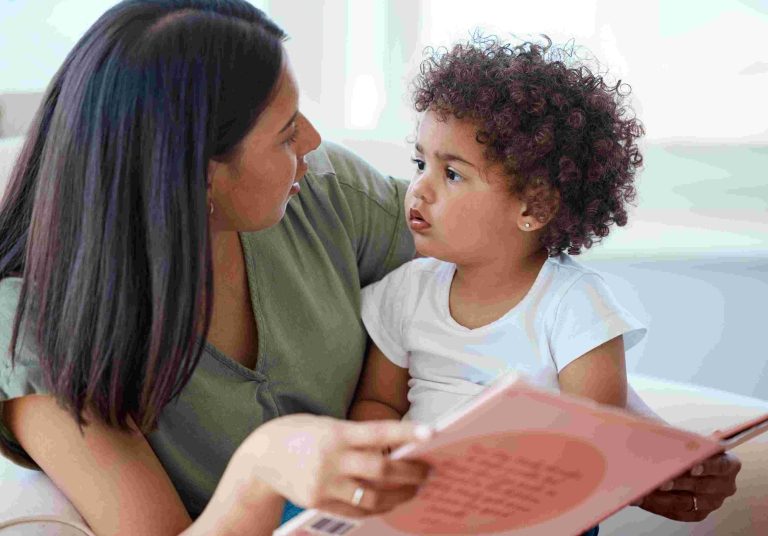
In emotional coaching, parents or caregivers help children name and accept their emotions. By virtue of acknowledging what kids are feeling by accurately naming their emotions (i.e., I see that you are upset, frustrated, lonely, worried, anxious, excited, elated) negative feelings are released, allowing the child to move on. In fact, if a child is angry, in order for him/her not to feel angry anymore, it is necessary that their being angry first be acknowledged and accepted. Oftentimes adults deny what children are feeling, or tell them not to feel something – which only pushes what children are feeling deeper inside where it can cause mental or physical harm. Remember that all feelings are allowed and acceptable; it is certain behaviors which are not allowed or acceptable.

Emotional Intelligence

Emotional intelligence is the ability to understand one’s feelings, to be able to manage one’s feelings in the face of life’s setbacks and challenges, and to relate empathically to the feelings of others. Research indicates that high emotional intelligence leads to more personal happiness, better mental health, better physical health, greater academic performance, and more successful professional functioning. Child caregivers can play a vital role in helping kids become more aware of their emotions and in developing their emotional intelligence.

Example of Emotional Coaching

If a child is crying and upset because his favorite toy has broken, as an adult, you want to teach the child that this is not the end of the world. However if tell a child straight away: “Don’t cry; it’s not the end of the world,” or, “Calm down; we will buy you a new toy,” in all likelihood the child will respond by crying even louder. Your telling a feeling to ‘go away’ only causes the feeling to dig in deeper. Instead, you want to validate the child’s feelings using emotional coaching, such as saying: “I see how sad/upset you are that your favorite toy broke! I can tell you really want to play with it right now.” The more empathically and accurately you can name a child’s feelings, the sooner and more completely will the feeling ‘clear,’ allowing the child to return to a level of stability and calmness. At this point you can help the child come up with solutions to the problem at hand.

One golden rule of emotional coaching is to never use the word “but” when validating a feeling, as it effectively erases the entire message. For example, avoid saying: “I see how upset you are that your favorite toy broke, but it’s not the end of the world; we can buy another one just like it.” Remember also that making a child happy is not the goal of emotional coaching; rather, we want to give children a set of skills whereby they can learn to manage their distresses by learning how to name their feelings, which will ultimately help them develop into well-adjusted and high-functioning older children and adults.

“Shades” of Feeling Words

In order to maximize the effect of emotional coaching and the naming of children’s emotions, it is best to keep on hand an entire glossary or list of “feeling words” which include not only the standard words we tend to use again and again (happy, sad, glad, mad, scared), but a words which describe ‘shades’ of emotions, such as: calm, peaceful, excited, disappointed, hurt, lonely, insulted, embarrassed, unsure, hesitant, bored, curious, interested, anxious, annoyed, worried, terrified, furious, panicked, and more. With such an expanded vocabulary of feeling words at their fingertips, both children and adults will be able to better manage, process, and clear negative emotions throughout their lives.

4 Additional Benefits of Emotional Intelligence

Here some additional benefits of helping children develop emotional intelligence:

•1) Kids become more sensitive to the feelings of others

•2) Kids are better able to connect with other people

•3) Improves children’s listening skills

•4) Children are better able to resolve conflicts peacefully instead of resorting to problematic physical behaviors such as hitting, kicking, punching, etc.

Finally, there are many fun ways to teach children all about feeling words. Search the Internet for a variety of creative activities and games which help children learn to identify and name facial expressions and feelings.

Use Your Words

Teaching Young Children to Use Their Words

Teaching young children to “use their words” is a well-known educational tool aimed at increasing kids’ communication skills and teaching kids how express their feelings rather than resort to physical means (i.e., hitting, biting, scratching, etc.) to resolve conflicts. All daycare staff should be trained in how and when to encourage children to use their words, and at which ages children need help in finding the right words to express their feelings. Teaching kids to use their words is also a developmental strategy in the realm of “emotional intelligence,” or “emotional coaching,” wherein parents and caregivers teach kids how to name their emotions and learn to deal with setbacks and change.

Giving Children a Vocabulary of Words

Whether you are teaching kids to use their words to promote peaceful conflict resolution, or whether you are trying to provide children with a vocabulary of “feeling words” to express their emotions through language rather than through problematic behavior (i.e., tantrums, crying, sulking, hitting, biting, kicking, or becoming withdrawn and silent), you can play a vital role in their development by promoting the skill of “using your words.”

Teaching Kids Which Words to Use

Preschoolers often don’t have the skills necessary to use their words on their own. Not only do they not have experience in solving conflicts, but their language skills are not yet developed, and even kids who have an excellent vocabulary may not know exactly what to say in a certain situation. Furthermore, in the middle of an actual altercation, kids tend to forget what they have learned in theory. As caregivers, you can do a lot to train kids in advance and to serve as a verbal resource and guide during ‘real time’ situations.

3 Ways To Conflict Resolution

Here is but a small sample of specific “using your words” suggestions you can teach daycare kids to promote conflict resolution:

•- I don’t like it when you grab my crayons. I want them back.

•- Can I have a turn on the swings when you’re finished?

•- I was here first. I don’t like it when you push ahead of me.

Top 9 Words For Emotional Coaching

Here are some examples the types of words you can teach children to increase their “feeling word vocabulary”:

•- Happy

•- Frustrated

•- Lonely

•- Sad

•- Embarrassed

•- Mad

•- Relaxed

•- Loved

•- Proud

Practice, Practice, Practice

One of the keys to the success of children being able to use their words is how much practice they have in doing so. Adults should role-play with kids so that they can practice using their words in an array of situations and especially in scenarios where you know they have run into difficulties expressing themselves in the past. Keep the sentences simple, specific, and short, but practice, practice, practice…

Benefits of Teaching Kids to Express Themselves Verbally

Studies indicate that children with high emotional intelligence feel more positive, more in control, and are better equipped to handle their emotions when life throws them a curveball. Kids’ ability to express their own emotions also makes them more understanding of others and more sensitive to other people’s feelings. They learn to respect others, how to empathize, and ultimately to listen without judging.

When parents and childcare providers teach kids to use their words and speak directly to other children, kids also learn to set personal limits (i.e., “It’s my turn now; you can play with the car when I’m finished”) and to set these limits in a respectful manner.

Hopefully, the communication skills children learn in daycare settings will serve them well throughout their lives.


The Effects of Day Care on Children’s Emotional and Cognitive Development

The past decade has seen many concerns for parents as to whether placing your child in daycare during the pre-kindergarten years has negative or positive effects on their long-term development and overall well-being. Of course the mother-infant bond is incredibly important, and should never be damaged, but the burning question is whether or not daycare actually does damage that bond, or if it has some positive effects that successfully counteract the negatives. Although the early studies seemed to focus solely on the harm done to children who are put into daycare, more recent studies show that out-of-home care does not appear to damage children’s cognitive development or their social and emotional skills in the least-good news for parents!

Choose Your Daycare Wisely

Before you get too excited, most studies agree that if at all possible babies before the age of one do tend to do better when they are with their parent. You must also take into consideration the quality of daycare, as that will definitely have bearing on the final outcome as well. As all parents are aware, you must choose your daycare wisely, and ensure there is a good adult to child ratio, and that all necessary safety features are in place. Talk to lots of other parents whose children attend a particular daycare as they are usually always the very best source of information in making your final decision. If the majority of the parents are happy with the daycare, and the children mostly all seem happy, occupied and healthy, then it is probably a good choice. Depending on where you live, your daycare may or may not require licensing, however if a daycare is state-licensed, you can be fairly sure they have been through some fairly rigorous testing.

Family Still Has More Influence

The parent who worries that his or her child’s daycare may end up having more importance in the child’s life than the child’s family can relax. Even families who use full-time child care have every bit as much influence on their children as the families who use no outside child care. Parents should never feel as if they have relinquished control over their own child, because the family impact will still remain the highest for the children. Of course the day care your child is in will affect his or her development, however high quality day care-the critical component-is related to children who perform well on tests of social and emotional development as well as intellectual development. Low-quality child care can, of course, be the cause of poor performance in these areas. Even the children who were put into day care as babies, and show some negative effects by the age of two, have mostly overcome the negative by the age of three, and certainly by the time they begin kindergarten. Consider, however, that testing children’s emotional and intellectual development at age two can be an unsteady gauge–two year olds are, after all, testing every boundary known to man, whether in day care or at home with mom.

Quality Time Spent With Mom and Dad

If we assume that children are safely in a high-quality daycare situation, studies have shown that even though the mothers who stayed home with their children may have more actual time with them, the quality of the time spent with the children does not differ between working and non-working mothers. The working mothers will usually compensate for the time they spend away from their children by doing their best to make sure the time they do have with them is high quality time. The fathers of children in high-quality daycares also appeared to be more involved with parenting duties and the interactions with their children

In the end there is little solid evidence which points to the disruptive effects of daycare, and much of the newer evidence points to positive outcomes for most children in daycare, depending on the quality of the particular daycare as well as the home environment of the child.

Montessori Method

The Montessori Method was started over 100 years ago when Maria Montessori opened her first childcare center in Rome in 1907.

Philosophy

The Montessori Method is a whole philosophy and there are several different approaches and organizations in the United States. Since Maria Montessori’s day, many of her concepts and methods like self directed learning, experiential play and the use of child sized furniture have been incorporated into the main stream. However, some other specific materials like her mathematical rods are not so well known.

Mathematical Rods

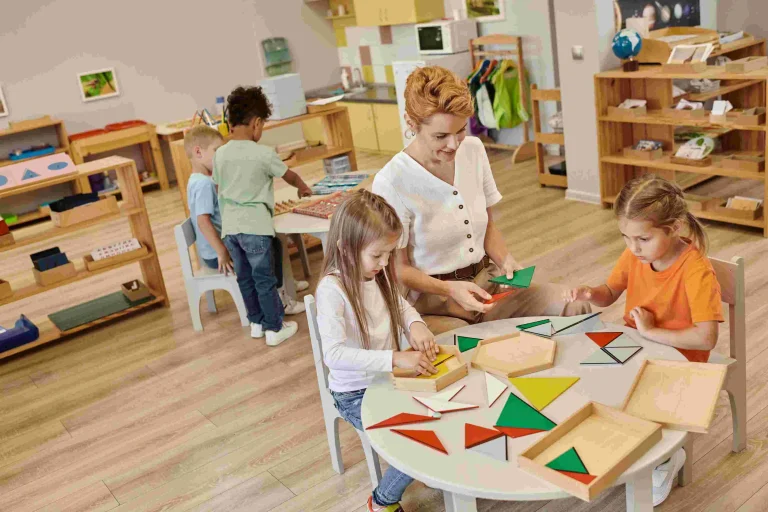
Mathematical rods are designed to enable children to understand mathematical concepts and consist of 10 rods of varying lengths. These rods work on the metric system and increase in size from 10cm to 1 meter. The first 10cm rod is colored red, the next the 20cm rod is half red and half blue, with each 10cm addition being marked in either red or blue. The 1 meter rod is divided into 10 sections that alternate in color red, blue, red, blue etc. With other equipment like spindles, cards, beads and numbers cut out in sandpaper, a child not only learns the numbers but experiences the relationship that numbers have to each other. By combining the rods in various ways, and using other Montessori equipment like the pink tower, a child can learn mathematical concepts at a younger age than traditional methods.

Music

Ideas like music and movement which we are very familiar with today were developed by Maria Montessori and her associates. One idea used in the Method is ‘walking on the line’. This is where children place one foot in front of the other, heel to toe, and walk slowly and carefully along a painted narrow curved line while listening to a simple tune. Variations on this include balancing a bean bag on the head, carrying a bell without letting it ring and so on. You can now buy CD’s and even a Nintendo Montessori Music game ($30) to allow you to develop musical skills in the children in your care.

Sensorial

Maria Montessori was a great believer in a sensorial approach to learning. She believed in letting children focus on one sensation at a time. To enhance this she would blindfold the children with colorful blindfolds so they could concentrate on the other senses of smell, taste, touch or sound. For example, with the sense of smell, children smelled various scents and learned to identify them only using their nose. In other exercises a child may have found an object inside a full bag, indentifying it only by the sense of touch. Again many of these ideas are used today in a modified form in a regular playgroup, pre-school or kindergarten.

Training

Montessori schools and daycare programs are very popular and you can learn more about the Method or take training courses from one of the Montessori organizations. If you wish to run a formal Montessori day care program you will need accreditation. Online accredited diploma courses ($2000 +) are available for both parents and professionals who wish to use the method with either the 0-3 or the 3-6 age groups. Alternatively you may be able to find an accredited teacher training class in your area.

Even if you don’t want a professional qualification there is nothing to stop you using some of her methods or the Montessori equipment in your day care center.

Check out the rest of our site for more information and tips for your day care center.

Baby Sign

If you run a day center for young children one of your problems is how do you communicate with your young charges when they are too young to speak? Well now you can use ‘baby sign’.

What Is It?

Baby sign is a way for young babies to communicate with their carers before they learn to talk. Based on ASL (American Sign Language) or BSL (British Sign Language) they use simple signs that a baby can easily learn so that they can ask for ‘milk’ or say they are ‘wet’ or ‘dirty’. They can even make up simple sentences, well before they can speak.

How Does It Benefit?

Babies who know how to sign are less frustrated and have fewer tears and tantrums trying to communicate with adults who don’t understand what they want. If you are looking after a lot of children, imagine how much easier it will be to care for them if they all communicate using the same signs instead of you having to work out what each of them wants by guesswork.

Isn’t Signing For Deaf People?

Yes, usually it is deaf people who use sign language, but now with the world-wide ‘baby sign movement’ lots of hearing parents are teaching their toddlers and young babies to sign. And because ‘babysign’ is based on ASL or BSL both you and your small charges will be able to sign with deaf people in the neighborhood too!

Will It Affect Speech Development?

No. Leading baby sign experts’ research shows that babies taught to sign actually have better vocabularies when they do start to speak. By helping children to communicate easily with adults, baby sign gives young children more incentive to speak. Because caregivers respond to signs the baby makes with speech as well as sign, as the baby gets old enough to talk the baby also will use both sign and speech. In fact, learning ‘baby sign’ gives the baby a head start in language acquisition. Children who have learned baby sign also appear to have better IQ’s and more self-esteem and self-confidence.

What Age Can They Start?

You can start using sign with a baby as soon as you like, and you can actively teach a baby sign language from about six months. Depending on how old the baby is when they start, they will start to use the signs themselves about 4-6 weeks after being introduced to a sign.

Which Signs Should They Learn First?

Start with signs like ‘milk’ ‘more’ ‘juice’ and so on. Only introduce one or two signs at a time. As the baby starts to sign back you can gradually introduce more signs.

Learning Sign

If you want to introduce ‘baby sign’ as an activity in your day care center there are various ways to learn ‘baby sign’. You can choose from DVD’s, sites like YouTube, or certified centers of baby sign. There is even an iPhone application you can download!

Why not train all your staff in ‘baby sign’ so that you can become a recognized and certificated ‘baby sign daycare center’ and thereby boost your business.

Understanding The Shy Toddler

Kids come in all different flavors. Some are outgoing while others have a hard time engaging their peers and being sociable. It behooves daycare educators to gain some understanding of why some children are shy so that they can help timid children to be less afraid of social interaction.

Parents of such children tend to express concerns about their child’s shyness. From the daycare worker’s standpoint, the shy child is observed to be an outsider: he doesn’t participate in group discussions, doesn’t speak unless spoken to, and is a follower rather than a leader. What causes this behavior and is it unnatural?

Shows Discomfort

According to Dr. Jodi Stoner, a clinical psychologist, shyness is several interrelated behaviors that involve the child withdrawing from social interactions with others while exhibiting limitations in social skills. The child will show discomfort when placed in a situation where he must make friends. He may hide, or cling to an adult. He plainly shows his discomfort and his reluctance also to engage in any new activities. Many shy children come from homes where they have been the subjects of much criticism. Shy children have difficulty talking about their feelings.

The trait of shyness is one that is usually acquired as a result of a child’s environment. In some cases, shyness is cultural. Shyness in 6 month-olds is normal and the trait tends to resurface as the child turns 4. Such timidity may be attributed to feelings of social self-consciousness in combination with feelings of embarrassment. Such feelings tend to peak just before adolescence with self-consciousness being a hallmark trait for “tweens.”

Genetic Predisposition

Another factor is that certain children have a genetic predisposition for shyness. It is just their nature to be quiet and observant and to keep their feelings in reserve. In other cases, shyness is the direct result of a very extroverted or imposing sibling or parent who tends to overshadow the child.

One very important piece of advice is to not allow your child to hear you call him shy. This will have the affect of labeling him and if you call him shy, he will respond by acting as you seem to expect. Hand and hand with this advice is to never make excuses for the child’s shyness, “Excuse Billy for not thanking you. He is very shy.” All this does is to perpetuate his shyness. The stereotype hurts the child’s feelings on a certain level, as if this is the highest level of your expectations for him: that he is and always will be shy. This causes damage to his self-image and the prophecy becomes self-fulfilling. Don’t discuss his shyness in front of him.

Positive Trait

Instead, change the way you think about shyness. Shyness can be a strong, positive trait in which the child has a rich internal life, is a good observer, thinks before he speaks, and has no need to be at the center of attention. Shy children like to be prepared and if they are not labeled may mature to a place in which their shyness evolves into something else: good listening and thoughtful speaking skills.

Managing ADHD In Daycare

Lots of preschoolers exhibit behaviors that have all the hallmarks of attention deficit and hyperactivity disorder (ADHD). They can’t sit still, they’re impulsive, they find it hard to wait in line, they interrupt during storytime, they’re disorganized, they can’t stick with a task and finish it, their attention spans are briefer than brief, and they can’t take the slightest bit of frustration without blowing a gasket.

A Challenge

If, as a daycare provider, you have one such child in your charge, you’re bound to find it a challenge. But often, there are many such children within a given group. Learning the strategies for coping with these children and their behaviors is crucial for everyone involved, including the other kids in your care.

One of the most important pieces of advice you’ll ever receive is to limit negative remarks. According to child neurologist Dr. Sara J. Dorison, such remarks may lead not only to an escalation of symptoms in children with ADHD, but will also lead to a state in which the child feels anxious about the daycare center or preschool. Also, there is a tendency for teachers to make lists in their heads so as to make a full, very negative report of the ADHD child to his parent at the end of the day.

Instead, Dorison suggests abbreviating the report to a short statement with a positive ending such as, “Billy had a rough day, but I’m sure tomorrow will be much better.” This type of statement lends an air of encouragement to the child and parents and helps them to know you’re on their side. If there are other negative issues that must be discussed, send the details in a sealed note, or make a call to the parent; but never in the presence of the child in question.

Well-Timed Activities

Daycare providers should take a close look at the activities they schedule and make sure to include plenty of opportunities to develop gross motor coordination. Author Laurie LeComer, who wrote A Parent’s Guide to Developmental Delays says that if gross motor activities are well-timed, they should enable the ADHD child to sit and focus during more passive activities, such as storytime.

Another important concept is to target only a couple of problem behaviors at a time. For example, if the ADHD child acts out in an aggressive manner, the daycare provider can sit down with the child and explain that angry hands can’t touch. But if every behavior is targeted at the same time, the child will end up in a state of confusion and can’t possibly comply with even a single demand. The only results will be frustration and an inability to cooperate. Start with aggression and then when this issue is resolved, move on to fidgeting, cleaning, and so forth.

Raising Standards In Daycare Centers

The National Governors Association (NGA) has chosen Oregon as one of six states who serve as an example for raising the standards of daycare throughout the United States.

During the daycare boom of the 70’s and 80’s an idea was formed that licensing standards for daycare should focus on staff to child ratios and on safety and health. The notions of a quality curriculum or coordinating teaching efforts according to a child’s developmental milestones fell by the wayside. Now, there is a movement to redirect this mistaken focus.

Brain Architecture

From the time a child is born until he reaches the age of five, the architecture of the brain takes shape. These formative years wield impact on the child’s future in terms of his economic success, his productivity in the workplace, and his mental health. This is according to John Thomasian, who is the director of the NGA’s Center for Best Practices. It is crucial that daycare centers provide direction and stimulation during this early childhood process.

Oregon has taken this responsibility to heart, says Dell Ford, a Head Start specialist with the Oregon Department of Education, making it a requirement that state-funded preschool programs match their standards to those of the federal Head Start program. But Oregon didn’t stop there—the state also initiated a program called Equip that works toward upgrading the skills of daycare staff by providing training and by raising standards in both daycare centers and home-based daycare initiatives.

Improving Skills

Ford says that the NGA urges daycare providers to assess their 3 and 4 year-old charges during story time, for instance. The staff is encouraged to see if the kids can pay attention throughout the entire reading of the book, retell the story they’ve had read to them, and can respond to questions relating to storybook characters and plot development. If the answer to any of these questions is in the negative, the provider should attempt to work toward improving those skills. According to Ford, raised standards in the daycare centers would include a focus not just on early literacy and math skills, but would also speak to socialization, the arts, and health.

Oregon’s governor, Ted Kulongoski issued a statement in praise of the state’s raising of the bar for early childhood education. “With the support from national experts, we will move even closer to designing a system and investment plan that can offer every child access to high-quality learning opportunities to prepare them for kindergarten and beyond,” he said.

Accepting Differences

Children need an environment in which they can begin to learn about differences. Between the ages of 2 and 5, children are becoming aware of gender, race, ethnicity, and disabilities (Neugebauer, 1992). Our goal with this month’s theme is for children to develop fairness and tolerance for differences and to learn to challenge unfair treatment of others. After all, the brave firefighters and police who rushed in to save the people at the World Trade Towers didn’t give any consideration to racial background. They were saving people, plain and simple.

Social Skills

Learning basic social skills such as saying thank you, sharing toys, greeting friends in an appropriate manner, etc., gives children basic tools to develop tolerance of others. Our physical environment also plays a role in our cultural learning. Posters demonstrating ethnic and racial diversity, dolls of varying colours, sizes, gender, even those with disabilities, crayons that contain a variety of skin tones all play a role in learning to accept differences. Look around your facility and see where you can improve on this theme. You can find calendars like the one at earthcalendat.net that note holidays from other cultures and point these days to celebrate out to the children. When we recognize and celebrate the differences among staff, parents, and children we set the example for them to follow.

Some of the ways you can enhance the theme of Accepting Differences is to plan ways to share differences by:
Taking one day to talk about how we are all the same, especially when it comes to feelings.
You can also use props to demonstrate how we may be different on the outside but the same on
the inside. One idea is to use brown and white eggs. Ask the children to tell you how they are
different in colour, size, shape. The using clear bowls break the eggs open and ask the children
to tell you what they see. The results, despite the obvious differences, we are all build the same
on the inside, which is what makes us human beings.
Have some clothing from different cultures in the dress-up area. Demonstrate how they are worn
and why a certain culture dresses they way they do. Your librarian can help you find books to
read to the children on this topic.

Language Skills

For a wonderful list of books for young children on multiculturalism and diversity visit this National Network For Child Care link or take a field trip to your local library. Talk to your local librarian about setting up a reading session for your children on multiculturalism. You might also want to ask the parents to bring in books from home about their culture so you can share these with the children.

Here’s an interesting story children can act out. Begin by telling what happened not so very long ago, when the children’s parents or family members were about their age:

One day, a black woman named Rosa Parks was riding home on a bus after a long day of work. She was very tired. She got on the bus and sat in a vacant seat.

In those days her city had a special law: if there weren’t enough seats on the bus for white
people,black people were supposed to give up their seats to them. Soon after she got on, the
bus seats were full, and then more people got on. The white people expected Rosa to get up
from her seat.

Rosa was exhausted. She said, “No,” and wouldn’t give up her seat. Rosa Parks was arrested
and put in jail. Many people heard what happened; some didn’t think it was fair. So the black
people in her town said, “We aren’t going to ride the bus any more until the law is changed.”
For one year they didn’t ride the bus. Finally, the law was changed! Rosa Parks wanted African
Americans to be treated fairly. All across the country, people began to insist on their civil
rights.

Encourage the children to act out the story. Use props such as chairs, stools, or boxes for bus seats. Children can choose who will be the bus driver, Rosa Parks, the person who wanted a seat, the police officer, and other passengers on the bus. Let children direct the action and use their own words. Props such as bus tickets and shopping bags might be used.

After the children have finished reenacting what happened, talk about how each of the people involved probably felt: Rosa Parks, the driver, the person who wanted Rosa’s seat, the police officer. Why did they do what they did? Expand children’s play if they’re interested. You could build on themes including transportation, women in history, the Civil Rights Movement, or local, state, and federal laws.

(From the National Network for Child Care – NNCC. (1994). The Rosa Parks story: How one person made a difference. In M. Lopes (Ed.) CareGiver News (December, p.1). Amherst, MA: University of Massachusetts Cooperative Extension.)

Music & Creative Movement

Parents and staff with varying cultural backgrounds can be a valuable resource with this theme. Ask them to share music that their family enjoys. Let the children listen music and get them to sing and dance. Children will begin to see that all people like to sing and dance, but every group has its own special ways of doing it. Talk with the children about how different music sounds: loud, soft, fast, or slow. Listen for the different instruments. Again, ask parents if they have any instruments they would be willing to share with the children to enhance their learning experience.

Arts & Crafts

Set out white 3″ x 5″ cards, a black ink pad, a pen, and a magnifying glass. Ask the children to
make prints of their thumbs by pressing them on the ink pad and then on the cards. Label each
print with the child’s name. Let children use the magnifying glass to see how the prints are alike
and different. Point out that everyone has patterns on the skin of their fingers and each person’s
fingerprints are different from anyone else’s.

Boil eggs of differing colours and sizes. Have the children using crayons, markers, felt pieces,
etc. to decorate the egg in their own likeness. (Can be used in conjunction with the egg
demonstration noted above.)

Read the poem A Box of Crayons by Shane DeRolf, to your children . It is about the different
colors getting along and liking each other. Then, have the children draw their portraits on a a
precut oversized crayon pattern. Cut the crayon out when the children are done. Place all the
crayons into a giant box of crayons that you can create using construction paper. This craft
makes an adorable wall handing piece demonstrating the diversity of everyone in your group.

Another craft and art idea you can tie into your language skills is learning about masks from
around the world and what they symbolize. When you’re done the children can create their own
masks. The following day you can have each child tell a story about their mask, write the story
on a board or note pad, and perhaps make your own book of mask stories. Blends in with the
Halloween theme too.

Another fun art activity has to do with learning about skin color. Children can mix paints to find
their own individual skin colors.

Science/Math/Cooking

Cooking: Learn about the different ways other cultures use to prepare foods. Host an ethnic lunch each month, for example, cook tortillas for lunch during Mexican week. Have parents or grandparents prepare a snack from their culture. Ask them to tell you about the food, how it is made, it’s orgins, etc., and talk about these with the children. While talking with the children about these foods, point out that no matter what specific things we like to eat, all children get hungry and all people can enjoy eating food together.

Science: Learning about the various backgrounds of the wonderful people who make up our universe teachers and caregivers with opportunities to teach the children about the different lands that people live in. Some may inhabit rain forests, deserts, mountains. Librarians can assist you in finding science activities related to theseregions. Housing and transportation can also make their way into this learning environment. The possibilities are a diverse as the people themselves.

Math: Your librarian can also assist you in locating math activities and concepts that are used by different cultures around the world. Of course, you can teach simple math concepts by using props related to the culture you are teaching at the time.

Teacher Initiated

You can start scheduling your activities based on holidays, or perhaps teach the children about one particular culture and way of life each month. Research native dances, costumes, way of life. Read books to the children about children from that particular culture. Find ways to honour the cultural uniqueness of children from this culture. Learn the different foods and serve some of these at snack times or host a cultural lunch on these days. Prepare arts and crafts native to the culture of the month. Your local librarian could help you immensely in this endeavor.

Student Initiated

Scheduling anti-biased activities can also begin as a result of observing the children and talking with them. Caregivers can ask questions from pictures of people from different cultures to see what the children know and where there may be any misinformation. The children’s responses will guide you to necessary directions for curriculum activities. It is also important to watch and to listen to how the children interact with each other particularly when children of varying backgrounds are part of the environment. Learning activities can be geared as a result of these “teachable moment” observations.

Taking Appropriate Action Against Discrimination

Children have to be tought that there is no place for discrimination or hurtful behaviour in our community. Caregivers and directors should have rules in place that address ethnic and gender slurs or hostile remarks about another’s appearance or disability so that children clearly understand that these remarks or actions are not acceptable.

As children learn by example, it is equally important to take a stand against adults who use bigoted language around the children. Children need to know that such behavior is unacceptable even if it is from a familiar adult. Asking the offending adult not to talk that was around children sends a clear message to all involved.

Learning Styles

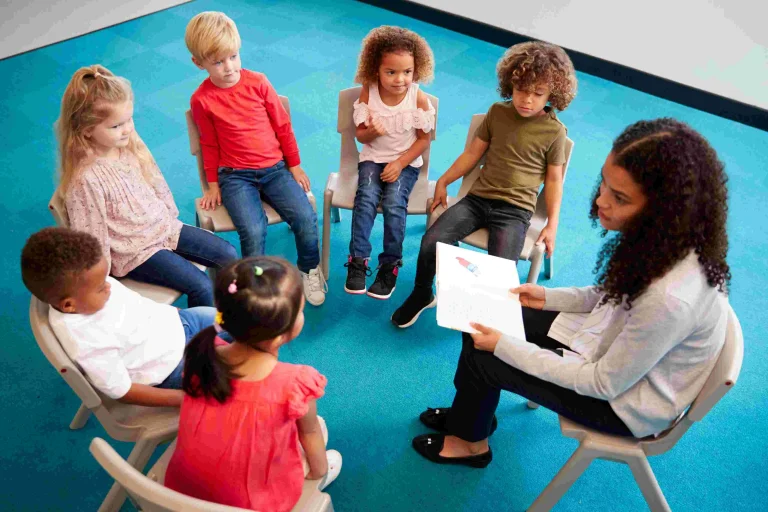
Each of us has a unique way of learning, of processing information. Where you might learn by visually watching someone or how something is done, I learn best by hearing or being taught orally. Still your best friend learns by getting in there and doing things. No one way is proven superior, it is simply a matter or our learning styles. The same holds true for how children learn.

Our Role

As a caregiver and a parent, recognizing these three learning styles (visual, auditory and kinesthetic) and using all three when working with your children will ensure everyone learns the same thing at the same time. Here are some suggestions to help you.

* Making a game out of a learning experience usually helps people to remember.
* Plan activities that show the lesson and include a corresponding hands-on activity.
* If you aren’t sure of a child’s learning style, ask his/her parents. By understanding each child’s learning style you can focus your attention on those children who learn best at one part of the lesson (as you’re reading a story), then focus on the children who learn best during another part of the lesson (like when you’re painting pictures related to the activity).
* If parents aren’t sure of their child’s unique learning style, pay attention to which types of activities a child naturally select. For example, kinesthetic learners prefer to build and mold things, while visual learners prefer to draw or create. Auditory learners are drawn to music and read-along stories.
* By applying all three learning experiences to a lesson, you allow each child to learn by their dominant style while enhancing their less dominant senses. Sometimes it is a simple matter of three simple steps, telling it, showing it and touching it.