Home Blog Page 12

Art Supplies & Toxins

When a parent or child care provider purchases art and craft supplies for their children’s use, they assume these products are safe.  But that is not always the case. Many products labeled as ‘non-toxic’ are misleading because they refer to the immediacy of the poisoning if ingested, inhaled, or absorbed by the skin, but do not reflect any danger in long term use of the product.

The Canadian Child Day Care Federation, in their Resource Sheet #21, Safety in the Arts, recommends parents and providers use, “materials that bear the CP Certified Product Seal and/or the AP Approved Product Seal of the (American) Art and Craft Materials Institute.” They also suggest that parents and providers contact manufacturers to find out what substances are use in its products
if these are not clearly marked on its packaging.

What To Avoid

Following are a few items listed on the CCDCF resource sheet which should be avoided, and which products to use in their place:

1. Avoid – powder clay which is easily inhaled and may contain toxic substances like silica or asbestos. Do not sand this product around children. Use talc-free, premixed clay, making sure to wet mop surfaces after use.

2. Avoid – instant paper mache, which may again contain toxic substances which are easily inhaled.  Use paper mache made from black and white newspaper and library or white paste.

3. Avoid – powdered tempera paints which may contain toxic pigments dangerous when inhaled.  Use liquid tempera paints or paints that are premixed by an adult.

4. Avoid – Permanent felt tipped markers which may contain toxic solvents. Use water-based markers only.

5. Avoid – instant glue model glue or other solvent based adhesives like epoxy. Use water-based white glue or library paste.
Parent providers alike should have the number for the poison control center clearly marked by their telephone and should keep the product labeled of any poisonous substances close by for quick referral in an emergency.

Preventing Strangulation

hough you wouldn’t think so, strangulation poses a very real threat to children.

But like all accidents, strangulation can be prevented by applying a few simple safety measures as follows:

* Never tie a pacifier or, for that matter, any object around a baby’s neck.
* Tie or fasten Venetian blind or drapery cords out of a child’s reach.
* Remove the chains between vertical blinds.
* Never place a crib, bed or chair near a blind or drapery cord.
* Avoid children’s clothing with drawstrings, or remove all drawstrings from existing clothing. Many a child has been strangulated on play equipment by drawstrings.
* Pay close attention to the clothing children wear to the playground: scarves, ties, hoods, and loose clothing can get caught on playground equipment.
* Avoid accordion style safety gates which, if spread too far, could entrap a child’s head.
* Remove mobiles with dangling cords once a child is able to grab at the objects.
* Remove toy box lids that can slam down on a child’s neck.
* Keep extension and appliance cords wrapped up and out of reach.
* Do not remove the centre strap from high chairs, car seats, swings, etc., as a child could easily slide down and catch his/her neck on the waist strap.

From our excludive Safety Tip of the Month Cards.

How Sick Is Too Sick

Winter: That time of year when children always seem to be sick. It’s one runny nose after the other, one bout of non-stop coughing and wheezing followed by an endless array of fever inducing viruses.

For a lot of parents and caregivers there is also the endless debate about when a child is, and is not, too ill to attend daycare. Hopefully caregivers have clearly defined in their Policy Statement when they will not accept an ill child into care. “As a general rule, children need to be at home when they need more care than you can give them while meeting the needs of the other children,” says the Canadian Paediatric Society in their book, Little Well Beings: A Handbook on Health in Family Day Care.

The CPA notes the following as the most reliable signs of sickness (usually too sick to be in care):

Behavioural Changes

* Unusually sleepy or drowsy
* Lack of Interest in other children or play
* Unusually irritable, cranky, or fussy
* Non-stop crying, especially high-pitched or weak or crying when cuddled
* Rapid breathing
* A change in behaviour with a rash or fever
* Unusual drooling
* Still neck (won’t move head up and down)
* Won’t swallow liquids or won’t eat.

Physical Signs

* Vomiting more than two times during the day.
* Diarrhea more than two times during the day
* Dehydration as evident by a dry tongue and mouth, or if a baby’s diaper stays dry longer than usual
* Yellow eyes or skin
* Rash with a fever or the child shows a change in behaviour along with the rash
* Fever that is keeping the child from his/her normal playing and happy routine. (Rectal temperature is 101.3 oF or 38.5 oC – Oral temperature is 100.4 oF or 38 oC or higher.)

The best way to gauge a child’s well-being throughout the day is to make a mental note of the child’s health upon arrival and by talking with the parents before they leave about the any concerns they may have about their child. It only takes a minute for parents to answer three simple questions:

* How did their child sleep during the night?
* Has the child been eating or drinking?
* What kind of a mood is the child in.

The best way to keep track of a child’s health isto learn more about the signs of illness with regards to each child in your care. It is advisable that parents complete a Medical Information Form, available in our Forms Section. Other forms that would be of great use to caregivers and parents include:

* Illness/Injury Report
* Administering Medication Form
* Permission slips for administering medication
* Child Development Form
* Daily Information Sheets for Infants

Resources

Little Well Beings: A Handbook on Health in Family Day Care
A project of the Canadian Paediatric Society

Who’s Your Safety Officer

Safety is a round-the-clock, all-year-round issue when it comes to children. But how do you teach the little tykes the importance of safety and why we have safety rules? One suggestion is to designate a Safety Officer for the month.

Once a month, pick a different child to act as the group’s Safety Officer. You could even purchase a play hard hat to be used as the official Safety Officer’s hat, or see if one of the parents could donate one. You’ll also need a clip board, pen and a safety checklist. It’s more fun if you have the children help you develop this list. It reinforces safety issues and provides opportunities to present different safety issues each month, such as the proper gear to use when riding a bike, or garage door safety, and so on.

The job of the Safety Officer is to use the checklist to go around your home or daycare to inspect each item. All the children can help here. The Officer says what needs checking, and the group investigates whether or not the emergency telephone numbers are visible by the phone, or that cleaning solvents and medicines are safely locked up, until each item on the list has been inspected.

When all is said and done, the Safety Officer can give a passing mark or a “needs improvement” mark to the checklist, and then be allowed to follow up on the list in a week or two so the group sees that safety issues are important and that you, as the role model, are doing everything in your power to keep them safe by fixing the “needs improvement” items.

Items to be inspected could include:

* Smoke detectors
* Stove tops are free of inflammable items
* Electrical outlets are covered
* Fire extinguisher is inspected regularly and readily accessible
* Food items are not past expire dates
* Sharp objects such as scissors, knives, etc. are out of harm’s way
* Stair wells and floors are free of items that could cause a child to trip and fall
* Toys are in good repair and broken toys with sharp edges are removed and placed in a “fix me” area
* Cords for curtains, blinds and extensions are tied back and out of a child’s reach
* Garage door if functioning properly
* Outdoor apparatus such as swings, etc. are in good shape with no protruding bolds or sharp edges that could harm a child
* Flashlights are working and easily accessible
* Medical emergency or first aid kit is fully stocked
* and so on.

You might consider making a special safety checklist for each season. For example, water and sun safety items for summer, winter activity safety for tobogganing, cold weather clothing, etc.

By assigning a Safety Officer role to the children they will really begin to see and understand the importance of safety in your home, at the daycare, and in their daily lives.

Winter Safety: Advice for parents and kids

Winter is an exciting time for kids. It brings great outdoor activities, such as snowboarding and skating, but also cold weather, ice and snow, which can present a danger to children. But that doesn’t mean they can’t enjoy the winter. Here are some winter safety tips for both parents and children.

In general:

* Never allow children to play outside alone. Establish a buddy system with one or more of their friends and have them look out for one another. Children younger than eight years of age should always be well supervised outside.
* Check from time to time to make sure children are warm and dry.
* Have younger children take frequent breaks to come inside for a warm drink.
* Never send children outside in extreme weather conditions such as snowstorms.
* Keep children indoors if the temperature falls below –25°C, or if the wind chill is–28°C or greater.
* Tell children not to put their tongues on cold metal. It may sound silly, but some kids still do it.
* Advise children to stay away from snowplows and snowblowers.
* Help children choose play areas with a warm shelter nearby such as a friend’s home.
* Advise children to play in an area away from roads, fences and water.
* Apply sunscreen to exposed skin, even when it’s cloudy.

Clothing:

* Dress children in several layers of clothing. If they get too warm, they can remove one layer at a time.
* Always remove children’s wet clothing and boots immediately.
* Make sure children wear a hat because most body heat is lost through the head.
* Have children keep their ears covered at all times to prevent frostbite.
* Have children wear mittens instead of gloves.
* Dress children in warm, waterproof boots that are roomy enough to wiggle their toes around.
* Remove all drawstrings from children’s clothing to prevent strangulation. Use Velcro or other fasteners instead, and use a neck warmer instead of a scarf.

Skating:

* Make sure children always wear a hockey or ski helmet while skating.
* Make sure children’s skates are comfortable, with good ankle support, to avoid twists, sprains or breaks.
* When possible, have children skate on public indoor or outdoor rinks. If this is not possible, children should remember to:

1. Obey all signs posted on or near the ice. Yellow signs usually mean skate with caution, and red usually means no skating allowed.
2. Make sure they are always supervised on the ice.
3. Never assume it’s safe to skate on a lake or pond. An adult should make sure the ice is at least 10 cm (four inches) thick, and check with local weather authorities for information about ice thickness.
4. Avoid walking on ice near moving water. Ice formed on moving water, such as rivers and creeks, will vary in thickness and is highly unpredictable.

Skiing/snowboarding:

Children should:

* Take lessons from a qualified skiing or snowboarding instructor.
* Never ski or snowboard alone.
* With parents, check equipment every year for fit and maintenance. Bindings should be checked annually by a qualified technician.
* Make sure they’re in control of their speed. Many injuries result from a loss of control. Stunts and fatigue also lead to injuries.
* Always wear a helmet with side vents that allow them to hear.
* When snowboarding, wear wrist guards to reduce the risk of wrist injury.
* Dress safely. Wear brightly-coloured clothing, and warm hats and mittens.
* Avoid icy hills. The risk of falls and injuries increases in icy conditions.
* Watch out for other skiers and snowboarders, as well as any other obstacles, on the slopes.
* Stay in designated areas and on marked trails.

* With lessons from a certified instructor, it’s okay for younger children to snowboard; however, their coordination is not fully developed until age 10 years. Reference: Canadian Association of Snowboard Instructors

Sledding:

Children should:

* Always wear either a ski or hockey helmet – not a bicycle helmet – while sledding.
* Never use a sled with sharp or jagged edges.
* Make sure the handholds on the sled are secure.
* Always sit up or kneel on a sled. Lying down increases the risk of head, spine and abdominal injuries.
* Never sled on or near roadways.
* Look for shallow slopes that are free of trees, fences or any other obstacles.
* Avoid sledding on crowded slopes.

Snow forts and snow banks:

Children should NOT:

* Build snow forts or make tunnels. They may collapse and suffocate a child.
* Play in or on snow banks. The driver of a snowplow or other vehicle may not see a child.

Snowballs

Children should NOT throw snowballs. Snowball fights can lead to injuries, especially to the eyes. Snowballs are more dangerous if the snow is hard-packed or contains a rock or some other hard object.

Snowmobiles:

* Children and adults should wear an approved helmet at all times. Head injuries are the leading cause of snowmobile-related deaths.
* Children younger than five years of age should never ride on a snowmobile, even with an adult.
* Children younger than 16 years of age should not operate a snowmobile.
* Anyone operating a snowmobile should take a formal safety training program.
* Never tow a child behind a snowmobile on a tube, tire, sled or saucer.

Resource: Published in Paediatrics & Child Health, January 2002.
Also available at: www.caringforkids.cps.ca.

Pesticides and Poisonous Plants

Pesticides and chemicals used to control fungi, insects, and weeds pose a serious threat to a child’s life. Safe handling of pesticides and chemicals is required and there are a number of precautions parents and caregivers should consider:

* pesticides and chemicals should be stored up and out of harm’s way.
* DO NOT mix or hande pesticides around children.
* DO NOT make pesticide solutions a little stronger for good measure as toomuch can cause injury to humans if absorbed into the skin
* do not use kitchen measuring, stirring or storing utensils
* make sure that no food products are eaten from plants treated with pesticides until after the appropriate days have passed
* keep children and pets away from treated aras for at least twenty four (24) hours to prevent them from coming in contact with the pesticides
* protect children from absorbing any chemicals into their skin by keeping them fully clothed when playing on treated areas
* wash your skin and clothing thoroughly after using pesticides and chemicals
* use alternatives to pesticides whenever possible

Poisonous Plants

Many annual and perennial plants commonly found in the garden are harmful to humans if ingested. Youngsters should be taught not to eat unfamiliar plants. Even a small amount of toxic plant substance can cause serious injury to a small child.

* Aconitum (monkshood) – all parts
* Bleeding heart – leaves and roots
* Castor bean – seeds
* Delphinium (larkspur) – young plants and seeds
* Digitalis (fox glove) – all parts
* Iris
* Lathyrus (sweet pea) – seeds
* Lily of the Valley – all parts
* Nicotiana (tobacco) – all parts
* Rhubarb – leaf blades

Bulbs

* Colchicum – bulb
* Hyacinth – bulb
* Narcissus (daffodil) – all parts
* Scilla – all parts
* Snow Drop – all parts
* Tulip

Should a child ingest a pesticide/chemical or eat part of a poisonous plant contact your local Poison Control Centre for help and information. In any home/facility where there are children the number for the Poison Control Centre should always be posted by the telephone.

How To Deal With Bullying

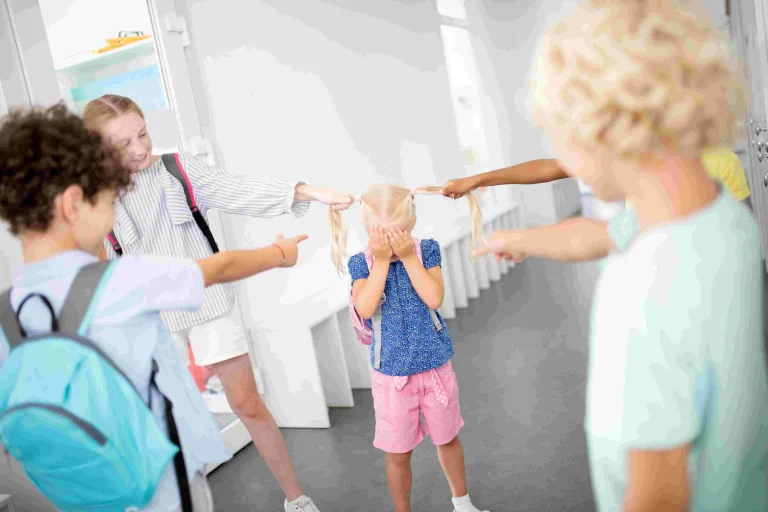
Bullying has been around forever.  We’ve all gone through it as kids, the humiliation, the intimidation, the feeling of helplessness.  But the form of bullying we knew is not the bullying that goes on today.  It has become increasingly violent and can cause serious harm.

Bullying is a form of physical and psychological power, creating anxiety, humiliation and chronic fear in its victims.  It is a power and control issue, and is found in schools, recreational facilities, just about anywhere children gather.  Bullying is done usually in secret, and remains hard to detect unless you are aware of its symptoms.

Types of Bullying

Open and Direct: Physical

Pushing, pinching, punching, fighting, choking, cornering, forcing, intimidation, screaming, staring, kicking.

Indirect: Emotional, Social, Verbal

Isolating, put-downs, joking, sarcasm, teasing, ridicule, insults, ignoring, labeling, witnessing without speaking.

Some Indirect Secretive Aggressive Acts of Bullying

Gang initiation, family abuse, group membership, graffiti, hate crimes, e-mail threats, stalking, gossip, animal abuse, lying, social isolation from peers.

Bullies Need Help To:

Become aware of the consequences of their behaviour, increase understanding to how they affect others around them, learn new life skills dealing with anger and other emotions.

How To Help a Bully:

Always model good behaviour, reinforce acts of kindness to those you encounter at school.  Children need to be taught that it is okay to tell a teacher or someone they trust if someone’s behaviour makes them feel uncomfortable.  They must understand that the code of silence MUST be broken in order for the same effect to go away.  Seeking intervention early can prevent long term self-esteem damage to its victims, and gives an opportunity for the Bully to face responsibility and get support.

How To Help the Victim of Bullying:

Children need to learn to develop their own voice, to stand up for themselves without violence, to relieve isolation, shame and guilt, to develop self-assertive skills and strategies, and to overcame the fear of seeking intervention.  Children need to be LISTENED to and given CREDIBILITY to their experiences.  We can no longer turn a deaf ear and a blind eye to any form of bullying no matter what the age of the child.

* NO ONE DESERVES TO BE BULLIED.

* NO ONE SHOULD FEEL THAT THEY DID SOMETHING, OR IS NOT IMPORTANT ENOUGH TO SEEK SUPPORT WHEN THEY ARE HURTING.

* CHILDREN NEED US TO LISTEN TO AND GIVE SUPPORT TO THEIR FEARS OF BULLYING.

For more information on how to teach self-assertive behaviour to your children visit your local library.

From: Bullying… A Phamplet distributed by the Assumption College High School in Windsor, Ontario.

A Second Look

Children bring out our protective instincts. It’s a natural desire to want to defend children, who have so little power, against any hint of evil. Maybe that’s why it becomes all too easy to presume guilt when an adult becomes a suspect of child abuse. It’s the mark of a civilized society to attempt to protect the innocent.

Maintaining Objectivity

It can be hard to remain open-minded when the adult who stands accused must prove that something never happened. It’s even harder to maintain objectivity when the accuser is a doctor with a pile of medical degrees and qualifications. But just as difficult to examine with any impartiality is the accusations of a child.

Because of these difficulties, many daycare providers, parents, teachers, and neighbors have been convicted on criminal charges of child abuse—even in cases where scientific evidence does not support the charges or there is no physical evidence.

Lawyers and judges who support changes in the judicial system that will encourage the truth are taking a second look at several such cases in an acknowledgment that innocent people have been convicted and that this leads to the destruction of the family and many childhoods. It is hoped that reevaluating these legal cases may help spot the mistakes that put the wrong people behind bars so that our legal system will not be doomed to repeat these mistakes. As John F. Kennedy said in this apt statement, “The great enemy of the truth is very often not the lie—deliberate, contrived and dishonest, but the myth, persistent, persuasive, and unrealistic. Belief in myths allows the comfort of opinion without the discomfort of thought.”

Sketchy Evidence

*Shaken Baby Syndrome—Two Wisconsin adults, Quentin Louis and Tammy Millerleile of Marathon County, were convicted of shaking babies to death. The conviction of Louis occurred in 2005, while the conviction of Millerleile was back in 2002. However, in August of 2009, Circuit Court Judge for Marathon Count, Judge Vincent Howard vacated Louis’ conviction, granting him a new trial. He based this decision on a ruling that states that the medical evidence that is offered in shaken-baby syndrome cases is just too sketchy to trust. The prosecutors have submitted an appeal in an effort toward retrying the Louis case. Meantime, a month after Howard vacated the Louis conviction he authorized payments to expert witnesses so they might review the evidence pertaining to the Millerleile conviction.

*Error-Ridden Autopsy Results—In Toronto, 20 out of 45 autopsies performed by former pathologist Dr. Charles Smith were found to contain errors. The error-riddled cases over which Smith presided go back as far as 1991. Twelve of these mistake-filled reports resulted in criminal convictions, while one of them let a possible criminal off the hook.

Because of Smith’s findings, William Mullins-Johnson spent 12 years in jail for raping and murdering his niece. But a 2005 review of Smith’s autopsy report discovered that the victim hadn’t been raped and strangled but had suffered from a chronic gastrointestinal ailment that caused her to choke to death on her own vomit.

Retain and Motivate Employees

1. Pay employees fairly and well, then get them to forget about money.
2. Treat each and every employee with respect. Show them that you care about them as persons, not just as workers.
3. Praise accomplishments … and attempts: · Both large and small l Verbally and in writing · At least 4 times more than you “criticize” l Promptly (as soon as observed) · Publicly … and in private l Sincerely
4. Clearly communicate goals, responsibilities and expectations. NEVER criticize in public – redirect in private.
5. Recognize performance appropriately and consistently: · Reward outstanding performance (e.g., with promotions and opportunities) · Do not tolerate sustained poor performance – coach & train or remove!
6. Involve employees in plans and decisions, especially those that affect them. Solicit their ideas and opinions. Encourage initiative.
7. Create opportunities for employees to learn & grow. Link the goals of the organization with the goals of each individual in it.
8. Actively listen to employees concerns – both work-related and personal.
9. Share information – promptly, openly and clearly. Tell the truth … with compassion.
10. Celebrate successes and milestones reached – organizational and personal. Create an organizational culture that is open, trusting and fun.

Reporting Child Abuse

Every child care provider knows she/he is obligated, by law, to report suspected child abuse. But did you also know you can be charged for not reporting if you knew about the abuse and a child is injured or killed? You can.

On Monday, Oct. 30th, 2005, a Plymouth Michigan Day Care Director was charged for ignoring the signs of suspected abuse that might have prevented the untimely death of 2-year-old Allison Newman in September. Newman’s foster mother, Carol Poole was charged with murder after the little girl suffered serious injuries at their Canton home.

Two former center employees say they raised concerns about suspicions of abuse to their supervisor, but the abuse was not reported to the state as is required by law.

State officials say they received no reports from the center, leading Wayne County Prosecutor Kym Worthy to file charges against the director.

“It’s all the more tragic when there was suspected abuse and it was not handled properly,” the Wayne County Prosecutor said.

Childtime day care where the director works, claims they investigated the situation but found nothing to substantiate the claims of abuse.

The state of Michigan has shut down the day care. A judge will make a recommendationwithin 30 days whether Childtime’s license should continue to be suspended, be revoked, or given back. It is up to the state after that to decide the direction they will take with the center.

Sadly Prosecutor Worthy said that the center’s employees had not been properly trained to report abuse.

Wha’t Your Policy?

When was the last time you reviewed your child abuse policy? How well do your employees understand your facility’s procedure for reporting suspected cases of child abuse? When was the last time you held a training session for your employees or invited a guest speaker from your local child protection agency in to discuss abuse and neglect with your staff? If you can’t answer that question definitively, now is a good time to do so. A child’s life may depend on it.