Home Blog Page 11

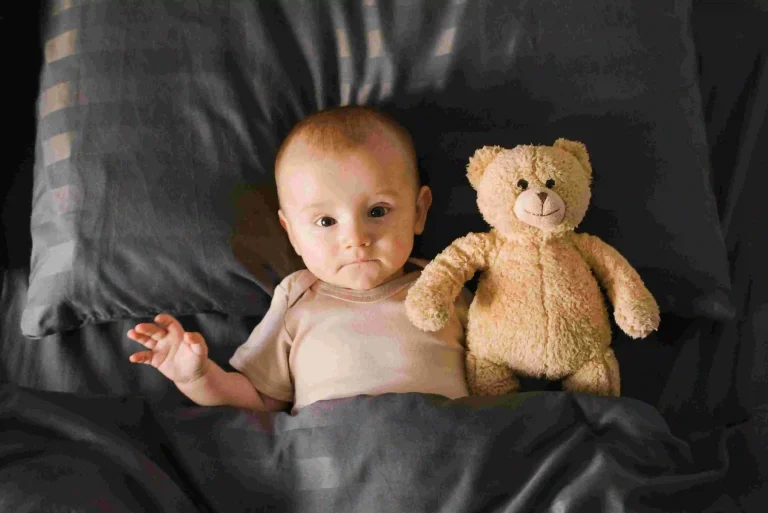
Teddy Bears and Extra Blankets in Crib Could Hurt Baby

Did you ever imagine that the cute teddy bear or comforting security blanket in your baby’s crib could be dangerous? “The truth is, soft bedding products could be hazardous if used improperly,” warns the Juvenile Products Manufacturers Association (JPMA).

“The safest sleeping environment for infants is on a firm matress in a crib which meets current manditory and voluntary standards. Use only a fitted crib sheet, matress pad, and/or waterproof pad between the sleeping baby and the crib matress,” advises Willian L. MacMillan, JPMA President. “Extra pillows, blankets, and plush toys may look comforting in the crib but should always be removed during the baby’s sleep time.”

JPMA reminds parents and child care providers to place full-term, healthy babies to sleep on their backs or sides and not to place infants to sleep on top of soft surfaces not specifically designed for infant sleep. JPMA made this recommendation in accordance with the American Academy of Pediatrics (AAP), Consumer Product Safety Commission (CPSC), Public Health Service (PHS) and other agencies.

“There is absolutely no suffocation risk to infants when nursery products such as cribs matress, matress pads, quilts, comforters and bumber pads are used according to manufacturers’ recommendations,” says MacMillan.

For More Information

If you have any questions about safe sleeping practices for infants, call the U.S. Public Health Service at 1-800-505 CRIB or the SIDS (Sudden Infant Death Syndrome) Alliance at 1-800-221-7437.

For a free brochure on safe selection and use of juvenile products, send a stamped, self-addressed business-size envelope to: JPMA Safety Brochure, 236 Royte 38-West, Suite 100, Moorestown, NJ 08057.

JPMA sponsors Baby Safety Month each September to help educate parents and child care providers on the safe selection and use of all baby products.

JPMA is a national trade organization of more than 250 companies in Canada and the United States. These companies manufacture and/or import infant products such as cribs, car seats, strollers, bedding and a wide range of accessories and decorative items.

Biting In Childcare

At childcare.net we get a lot of inquiries from parents and caregivers about dealing with children who bite in child care settings.

According to the Canadian Paediatric Society’s article, When Children Bite: What are the risks?, up to half of all children in day care centres were bitten during a one-year period, and that most bites happened in September at the beginning of the day care year. Toddlers (age 13 to 24 months) were bitten most frequently. Bites were most often to the arms and the face. Only one bite in 50 (2%) broke the skin.

While biting among children seems a natural part of childhood, there are those extreme and rare cases (roughly 2%), when biting actually breaks the skin. According to the CPS, these bites almost never lead to bacterial infections. Hence, the risk of transmitting a bacterial infection from a child bite appears to be very low, and a good cleansing of the wound should decrease the risk of a bacterial infection to almost zero.

Likewise, CPS notes that, “The risk of transmitting human immunodeficiency virus (HIV) through a bite in the day care centre, even when the skin is broken, is extremely unlikely. Treating a child with anti-HIV drugs is not recommended.”

Parents should be notified in writing by way of an Injury/Illness Report upon their arrival of any injury to their child, whether or not the injury required treatment of any kind.

Accident/Illness ReportSamples of these and other forms may be found in our Business Forms section. Child care providers should also have a copy of each child’s Medical Information Form available to ensure proper treatment is provided on an individual basis. These forms should be filled out by every parent prior to their child entering care.

Treating Bite Wounds

The Canadian Paediatric Society suggest that the usual precautions of wound care, as follows:

* If the skin is not broken, clean the wound with soap and water, apply a cold compress and soothe your child gently.
* If the skin is broken, let the wound bleed gently;
* clean the wound carefully with soap and water;
* apply a mild antiseptic;
* check whether the child has been vaccinated against tetanus and make sure that the shot is up-to-date;
* watch the wound over the next few days;
* if it gets red or begins to swell, call your doctor; and talk with your doctor about whether your child needs a vaccine against hepatitis B.

Handling Biters

Most children are not repeat biters and generally only bite out of frustration. It is always best for parents to talk to their child care provider about how they handle situations when a child bites. Most caregivers prefer to talk with a child about the behaviour and/or give them an occasional and brief “time out”. This generally let’s the child know this type of behaviour is not acceptable.

When a child is a repeat offender more drastic measures must be taken for the safety of the other children. Children who bite often should have their behaviour managed on an individual basis. Consultation with the parents is usually sought and appropriate measures agreed upon and acted upon by both the parents and the provider.

Parents who’s child is a recipient of frequent bites should be made aware of the provider’s or centre’s policy for handling these situations, as well as what precautions are being enlisted to ensure their child’s safety. Communication is the key in this and any problem that evolves in care.

HIV/AIDS & Child Care

HIV (Human Immunodeficiency Virus), the virus that leads to AIDS (Acquired Immune Deficiency Syndrome) is transmitted from one person to another by blood, body fluids containing blood, vaginal secretions, sperm, breast milk, and through unprotected intercourse or sharing contaminated needles. It is also transmitted from mother to child during pregnancy, delivery, or by breastfeeding.

In order to transmit HIV three conditions must be present:

* The blood must be fresh
* It must be in a sufficient quantity
* It must have a route of entry into the bloodstream of the infected person.

Keeping Safe

It is important for child care centres and family dayhome providers to adopt universal precautions to control the spread of any infection, including HIV. Where blood is involved, it is also important to use universal precautions, the measures developed to deal with blood-borne diseases like HIV and hepatitis B. These universal precautions include:

* Wash hands immediately after exposure to blood
* Cover cuts
* Use absorbent material to stop bleeding
* Wear disposable latex gloves when there is a lot of blood or if you have open cuts. Wash hands immediately after removing gloves
* Immediately clean blood-soiled surfaces with a bleach solution (household bleach kills HIV)
* Machine-wash bloodstained laundry separately in hot soapy water
* Place bloodstained materials in sealed plastic bags and discard in a lined, covered garbage container.

HIV is a fragile virus, and no cases of transmission through casual contact have been reported in child care anywhere in the world. HIV is not transmitted by:

* Touching, hugging, or kissing
* Sharing food, dishes, drinking glasses, or cutlery
* Being coughed, sneezed or cried on
* Sharing toys, even those that have been mouthed
* Diapers or toilet seats
* Urine, stool, vomit, saliva, mucus, or sweat (as long as it is untainted by blood).

Adapted from the Canadian Child Care Federation’s Resource Sheet #33, HIV/AIDS AND CHILD CARE.

Playground Safety

Each year, more than 200,000 children are injured on playgrounds. Most of these injuries could have been prevented.

During National Playground Safety Week, April 22-26, 2002, the National Program for Playground Safety is launching its new program “Kid Checkers”

The Kid Checker program will empower children to check for dangerous things on the playground before they use the equipment. The Kid Checker checklist is based on CPSC guidelines and the NPPS SAFE model.

In conjunction with the Kid Checkers program, NPPS is also developing Web pages just for children that will offer a variety of tools and games to help teach children about the importance of safety.

What Can You Do to Promote Playground Safety?

The NPPS offers the following suggestions:

* Complete playground equipment safety checks and evaluations.
* Challenge your daycare or school to an injury-free week on the playground.
* Host a guest speaker to discuss safety on the playground.
* Check out your local playgrounds. If there is hard surfacing, such as asphalt, concrete, dirt, or grass underneath play equipment, call the owner and politely voice your concern. Ask if there is anything you can do to help.
* Write to the editor of your hometown newspaper commenting on any playground safety issues in your local community.
* Give credit to those facilities with safe playgrounds as well. With children, make a maximum of five playground rules that they can remember and follow.

Things you can check to help make your playgrounds SAFE:

* Make sure you supervise children when they are playing on the playground.
* Check the ground cover surrounding all equipment. It is recommended that a soft surface of sand, wood chips, shredded tires or sponge mats be in place and should equal a depth of 10-12 inches. Asphalt, cement, stone or grass surfaces are too dangerous as they do not protect a falling child.
* Make certain all equipment is free of loose or broken parts and that bolts and screws are receding or are covered with plastic caps. The S-shaped rings attached to swing chains should be closed on both ends.
* Ensure sandboxes are free of animal feces.
* Equipment should be at least 6 feet away from fences or buildings to allow free movement of the children and the equipment parts.

If playground hazards are spotted, they should be reported immediately to the daycare provider, the local Parks and Recreation Department or housing authority. These problems should then be followed up to ensure they are corrected.

Playing Safely

Most of us think of playgrounds as a safe haven for children. Away from the dangers of the street they are an escape from the usual routines of the backyard. Here, youngsters of all ages can run, scream, climb – be free. The innocence with which they pursue each piece of equipment for the thrill it provides is the same innocence and spirit we feel when we take them there; when we watch them play; when we reminisce the joys of our own childhood. Scraped knees, falls from swings and slides, cuts from broken glass have no part in these memories. The broken arm we suffered from a fall off the “monkey bar” was simply a part of growing up. Or so it seemed at the time.

But playground injuries can be prevented. While a broken limb usually heals well with time, many other injuries like a fall to the head can lead to more severe problems including epilepsy, headaches, even behavioral abnormalities. It is up to us as parents and caregivers to understand playground safety, to be aware of possible hazards so our kids can have the joys of childhood they rightly deserve without the risk of injury.

The guidelines that follow will enable you to spot potential hazards.

* Before you allow your child to play, quickly scan the area for broken objects, stray animals, equipment that looks severely worn or has protruding parts.
* Check the ground cover surrounding all equipment. It is recommended that a soft surface of sand, wood chips, shredded tires or sponge mats be in place and should equal a depth of 10-12 inches. Asphalt, cement, stone or grass surfaces are too dangerous as they do not protect a falling child.
* Ensure that all equipment is securely anchored to the ground.
* Flexible rubber swing seats are better than traditional wood or plastic seating and will cause less harm when they strike a child.
* Make certain all equipment is free of loose or broken parts and that bolts and screws are receding or are covered with plastic caps. The S-shaped rings attached to swing chains should be closed on both ends.
* Equipment containing bars should measure less than 3-1/2″ in width or more than 9″ in width to eliminate the possibility of a child’s head becoming entrapped. Exercise rings should be less than 5″ wide.
* Young children should not be allowed on slides over 6 feet in height. Slides should have good handrails and gentle slopes.
* Equipment should be at least 6 feet away from fences or buildings to allow free movement of the children and the equipment parts.
* All equipment situated on the daycare property should be inspected weekly to ensure the children’s safety. Ask to see the center’s or the home’s inspection report.
* Most important, children must be properly supervised while they are on the playground. The attending adult must be actively involved with the children. Reading, chatting and resting do not constitute proper supervision. It is recommended that two adults be available while the children are playing outdoors.
* Sandboxes should have covers and be free of animal feces.
* Water play must be closely supervised and the children should never be left unattended for any reason.

If playground hazards are spotted, parents should report them immediately to the daycare provider, the local Parks and Recreation Department or housing authority. These problems should then be followed up to ensure they are corrected.

Trampoline Safety

The popularity of trampolines as a recreational activity for children has grown steadily over the years. But without proper instruction, supervision and the application
of basic trampoline safety rules, these fun pieces of apparatus can be downright dangerous.

Trampolines are listed by the American Academy of Orthopedic Surgeons as the number three kid sport leading to injuries. According to government estimates, there were almost 100,000 emergency room-treated trampoline injuries in the U.S. last year. Most of these injuries happened on home trampolines, and to children ages 5
through 14. The most catastrophic injuries
on the trampoline are the result of attempting the somersaults or inverted skills or jumping two at the same time.

Common trampoline injuries include:

* Broken bones (often needing surgery)
* Concussions and other head injuries
* Neck and spinal injuries
* Sprains/strains
* Bruises, scrapes and cuts

Children are injured on trampolines by:

* Falling off the trampoline
* Landing wrong while jumping
* Attempting stunts
* Colliding with another person on the trampoline
* Landing on the springs or frame of the trampoline

Both the Canadian Pediatric Society and the American Academy of Pediatrics recommend that trampolines should never be used at home, in gym classes, or on the playground. Even trampoline safety expert Marc Rabinoff, says backyard trampolines are extremely dangerous, and he himself wouldn’t buy one.

Despite their recommendations, trampoline home sales are rising steadily, according to trampoline manufacturers. So how can parents, who choose to have a trampoline in their back yard, keep their kids injury free?

The simplest method is often the one that gets ignored: Failing to read the manufacturer’s safety instructions in the user manuals.

What rules get broken the most?

* more than one person on the the trampoline at one time
* attempting somersaults and flips
* improper supervision
* not installing a safety enclosure
* not having padding that completely covers metal frame, hooks and all springs
* not keeping the trampoline away from structures and other play areas.

It goes without saying that safety practices must be taught to children and enforced strictly by parents. A new video and accompanying parent instruction booklet, called High Performance Techniques for Trampoline Safety, offers parents and children guidance on how to use their recreational trampoline appropriately.

The instruction video is designed to help children obtain the maximum health benefit while keeping safety first. “By following the guidelines in the video, parents can help their children cultivate a positive attitude toward safety, think before they act, and accept responsibility for their choices, writes Michael Brook, publisher of the video and a Colorado State Trampoline Champion. Brook strongly recommends parents purchase a safety enclosure for their backyard.

Toddler Nutrition

As anyone who has ever cared for a toddler can tell you; feeding a toddler is a challenge. Here’ll you’ll find some helpful tips to make make things just a little easier.

Regular Mealtimes

Toddler thrive on routines, even when it comes to snack and mealtimes. Providing a regular routine will help your child eat better.

Make Mealtimes Pleasant

Toddlers eat at their own pace and to their own tastes. The best thing you can do here is be respectful of your toddler’s own eating pace which certainly is never in time with our own. Be supportive and never forceful. Remember that for toddlers, eating is still a time for learning: a time to touch and experience different foods…so let them take enough time – as much as 20 to 30 minutes, if needed.

Sit with your toddler while he or she eats. They love the company. Your toddler will probably feel more comfortable in a highchair where they are at your level with their feet supported, not dangling.

Don’t Force A Toddler To Eat

If your toddler refuses to eat, let him/her know it’s okay, but that they have to sit with the family or the other children while they eat so you can all spend time together. In time your child will tend to join in. Worse case scenario….snack time is only a couple of hours away and he/she may be hungry then.

Resist Panhandling

Resist the temptation to offer your child food inbetween meal and snack time, particularly if they don’t eat when everyone else does. Children need to learn about limits and will soon learn that if they don’t eat at the designated times, they’ll just have to wait.

Keep the mood positive however. When you remove your child from the table or highchair, let them know that snack time will be in an hour or two and you hope that they are hungry then. Throwing out negative messages about the child’s eating will only cause frustration for everyone and often ends up with the child whining or crying. he or she will soon learn from the chain of events that being hungry between lunch and snack time is a consequence of his/her own actions.

Be Realistic About Amounts

Offer smaller portions to start and let your child ask for more. This lets the child feel as though he or she has more control rather than you trying to force him or her to eat more which generall causes conflict.

Limit the Juice and Milk

Too much juice of milk between meals can fill a toddler up so he/she is not hungry at meal time. Offer water or watered down juice instead.

Let Your To Be Messy

Playing and experimenting wddlerith food is a toddler right of passage. They have a natural curiosity about new foods and will often play with them before eating. Unless things get really messy or the child starts throwing food on the floor, let him or her enjoy the time. After all, we want children to learn to eat, but we also want them to learn to be pleasant at mealtimes.

Bon appetite!

Medicine Safety

Working with groups of children inevitably leads to a lot of illnesses. It only stands to reason. After all, children do not have immunity to the 100+ viruses that lurk in the shadows. And too, some children are just prone to chronic ear infections, colds, sore throats, and other such illnesses. As getting sick is as much a part of childhood as scrapes and falls, so too is having to take medicine, whether it be an over-the-counter remedy or a prescription from the doctor.

Administering medicine and ensuring it is safely out of a child’s reach is something parents and caregivers should be concerned about. Moreover, it is something parents and caregivers need to discuss in detail. Parents need to give the caregiver explicit instructions on the amount of medicine to be administered, the times it is to be given, and most important, what signs to watch for in the event the child suffers an allergic reaction, whether or not the medicine needs to be kept refrigerated, and so on.

Proper Procedure

To ensure proper handling and documentation of any medicine administered to a child, caregivers would be wise to use these very important forms:

* Permission Form to administer medication filled out and signed by the parents
* Medication Administration form for documenting every time the medication was administered, and if the child showed any signs of a reaction to the medication
* Medical Information Form filled out by the parents upon registration of the child into care. This form is a quick reference for emergency contacts, allergies, and other pertinent information on the child’s health.

These forms can be found in our Exclusive Products section on Forms, or in our book, Caregiver Aids: Business Forms For Caregivers and Parents.

Medicine Safety Precautions

Below is a list of other medicine safety precautions:

* All medication should be kept in a locked cabinet or drawer. If medication is to be kept refrigerated, ensure it is in a place where it is not visible to a child who opens the refrigerator, and that it is securely sealed.
* Each medication should be clearly marked with the child’s name.
* The numbers for the Poison Control Centre and emergency contacts for each child should be posted by the telephone. (Please visit our Health page to locate the Poison Control number in your area.)
* Use proper measuring utensils to ensure the child receives the correct dose of his/her medication. Using tableware to measure medication is not a good practice to get into and other children may put the utensil in their mouths if it is left on a counter and not cleaned off immediately. It is also a good practice to clean the measuring utensil immediately after use and place it with the child’s medication.
* Never give a child medication that was prescribed for someone else, not even a brother or sister. This includes over-the-counter fever-reducing medications as well.
* Always go over the instructions with the parents prior to administering to ensure doses are taken at the right times. For example, certain medications are prescribed to be taken at meal time and are only effective if taken as directed.
* For nonprescription or over-the-counter medication, always read the instructions careful to ensure the medication is safe for children, especially very young children. Never administer these medications if there is not a dose listed on the label for children of certain ages.
* Always administer medication until it is used-up or the recommended time (number of days) has lapsed. Generally, prescription medication is filled to the precise days or number
of doses.
* If you have questions or concerns, talk to the child’s doctor or pharmacist.

Preventing E.coli

The recent E.coli outbreak at a Walkerton, Ontario home daycare that affected four children should have both parents and child care providers doing a thorough assessment of their handwashing, sanitizing and diaper changing techniques and practices.

Children are susceptible to five different classes of E. coli that cause diarrhea infection. The bacteria either directly attacks the intestinal wall or produces a toxin that irritates the intestines. One of the most dangerous E. coli infections is E. coli O157:H7, which produces a toxin that can lead to hemolytic uremic syndrome – a severe illness that can seriously damage many organs, including the kidneys, and cause intestinal bleeding.

Daycares large and small are, unfortunately, potential breeding grounds for all sorts of infections and viruses. Children are in constant contact with each other and with providers. Toys, hands, feet, and just about anything else goes into unassuming mouths of infants and toddlers. Unclean hands rub eyes, and noses. Once an infection takes hold, it’s not long after that the entire cew becomes ill.

What Can Parents and Providers Do?

Good hand washing can stop the spread of many illnesses and infection in a matter of minutes. Children should be taught how to, and how often to wash their hands.

A frequent hand washing practice or rule for everyone, including caregivers as children mimic what they see, is vital. No exceptions, excuses or tantrums accepted. The Canadian Paediatric Society, in their handbook, Little Well Beings: A Handbook on Health in Family Day Care, offers these suggestions on when hands should be washed:

Before:

* Cooking or eating
* Feeding a baby or child
* Giving a child medication

After:

* Changing a Diaper
* Helping a child use the toilet
* Using the toilet yourself
* Taking care of a sick child
* Handling pets or animals
* Cleaning pet cages or litter boxes
* Wiping noses

Handwashing Techniques

Here are some simple steps for scrubbing those germs away.

Show children “how” to wash their hands, such as getting the hands completely wet under running warm water, scrubbing with soap for a minimum count of five, (making sure to get “in-between” places like between the fingers and under the nails where germs like to hang out), rinsing under running water for an additional count of five, then drying with a clean towel (preferably disposable towels in a child care setting).

It’s a good idea to wash your hands together with the children several times a day so they see you do it and learn how important this good habit is.

If your looking for ways to entice the little tykes to actually practice and make habits of handwashing routines, try using colourful soap or soaps with different shapes. Or sing while your wash, making it a rule that hands aren’t washed completely until the song is done.

Sanitary Diapering

Sanitary diapering also plays a key role in the fight against germ contamination. Best practices include:

* Having a diaper changing area away from any surfaces used for food preparation or child’s play. Having the area close to running water is best.
* Wear disposable gloves for each diaper change ensuring the gloves, along with the diaper, are properly disposed of in a sealed plastic bag, the placed in a covered garbage container.
* Wash hands directly after each diaper change.
* Wash the infants hands directly after the diaper change.
* Spray the diapering area immediately after with a solution of one part bleach to nine parts water. Dry with a clean towel before making another diaper change.

Other Great Tips

Make handwashing a fun and easy routine for kids and you’ll have success with your germ fighting efforts. Try these suggestions from the :

* Install safe stepping stools so that children can reach sinks and taps comfortably.
* Post handwashing posters at each sink. (Talk to your local Public Health Department, most will be happy to send you what they can…or, make one up with the children.)
* Sing handwashing songs like this one to the tune of Row your Boat):
Wash, wash, wash your hands.
Play our handy game.
Rub and scrub and scrub and rub.
Germs go down the drain.
* Kids can learn about the importance of handwashing by visiting this fun Web site: The Importance of Handwashing Are Microbes Friend or Foe?

Sick Child Policy

Most daycare centres and professional family daycare operators discuss their sick child policy with parents prior to admitting a child into care. In most instances, parents are required to sign that they have read and understood the terms under of the policy, and that they agree with and accept the terms. These guidelines are for the protection of everyone involved in the care. It is vitally important that, when it comes to a sick child, particularly a child with a fever, diarrhea, or vomiting, caregivers steadfastly refuse taking the child into care and that parents respect the caregiver’s decision. Moreover, parents should have a backup child care plan in place and never insist on taking a child to the facility when he or she is not well enough, by policy guidelines, to attend the care.

It would be advisable for caregivers to take a course either through their Public Health Department, hospital, or the local college, on how to recognize when a child is ill, how to care for a sick child, when a child is too sick to be in care, and more importantly, when to call for emergency assistance. Most PHDs have a Health Nurse who will be happy to talk with you. Your own peadiatrician or family physician may also offer some guidance. Caregivers should also document a suspected illness by using an Accident/ Injury/illness form. A copy should go into the child’s file, and a copy given to parents when they pick their child up. Any child who left the facility even mildly ill should be screened by the caregiver before entering care again.

Fire Prevention

Did you know…

* You have no more than 3 minutes to escape a burning building?
* More people die from smoke inhalation than from fire itself?
* Fire creates so much smoke that a room turns pitch black in minutes?
* The toxic fumes created by a fire can kill you within a few breaths?
* Heat produced by a fire can exceed temperatures of more than 1000 degrees F, yet temperatures of more than 150 degrees F can cause your body to shut down?

Given above, can you get your family or the children at your child care facility out safely on a moment’s notice? If you are telling yourself you “think so”, that isn’t good enough. You have to “know so” and without a shadow of a doubt.

Keeping Safe

The first step in any fire prevention plan is to ensure all fire alarms, sprinkler systems and extinguishers are fully operational. Follow this with a detailed escape route from every room in your home or facility. Use a piece of graph paper and draw the outline of your home marking each room, window, door and stairwell. Use arrows to make exit points. Practice your escape routes monthly to ensure everyone knows exactly what to do should a fire occur.

It is equally important to teach children fire safety. Some simple tips include:

* Showing the children how to stop, drop and roll if their clothing catches fire – have them practice the move
* Teaching them to alert an adult if they see smoke or fire
* Showing them the safe spot (where to go) once they are outside a burning building
* Borrowing books from the library that explain fire safety
* Visiting your local fire station.

And of course, saving lives begins by preventing fires. You need to:

* Keep all matches and flammables away from a child’s reach
* Keep exits, doorways and stairwells free of clutter at all times
* Ensure curtains, blankets and bedspreads are not close to heat sources such as the stove, space heater, radiators, heat vents, etc.

As with anything, how much you know is not as important as what you do with what you know. Please take a moment and call your local fire department for more lifesaving fire tips.