Home Blog Page 7

Choosing Child Care Checklist

Check out this useful information on how to best choose child care for your child.  Here are the things to ask yourself:

Are you Informed?

Quality child care doesn’t just happen. You have to know:

What to look for

What questions to ask on an interview

Did you Check References?

How to differentiate between good and shoddy care

That approved (licensed) care does NOT guarantee safe, good
child care.

Ask Yourself

Do you REALLY know:
What questions you SHOULD ask a director, caregiver, agency or
nanny during and interview?
What safety issues to look for in a daycare centre or family
dayhome?
What credentials a daycare director should have? An individual
caregiver?
What kind of activities a centre or dayhome should provide to help
your child develop his/her intellectual, physical, social and
emotional abilities?
What questions you SHOULD ask when checking the references
of a centre, caregiver, agency or nanny?
How to recognize the warning signs of poor child care?
The seven most important components of quality child care?
How to monitor your child care arrangements to ensure that they
remain safe and of good?

Choosing Daycare

In our choosing daycare section, parents can get all of the information they need to help them decide which day care model or center is right for their child.

Getting The Right Information

Choosing the right day care center can be an overwhelming task for many parents.  Does the center offer a safe and healthy environment for your child, are there age appropriate activities for your child, is the staff loving and caring, will your child receive any sort of educational activities at the center, are meals provided, what is the cost, why is child care so expensive, etc…….

We Make It Easier

To help make your task of finding appropriate child care just a bit easier, we have created this section to help answer some of your concerns about finding child care and have provided information to help guide parents through this confusing procedure.

Check out some of our ariticles on choosing daycare like: choosing child care, child care checklist, monitoring your child in daycare, quality care, infant child care and hiring the right nanny.

Safety And Health

In our Safety and Health section for parents get all of the information you need to ensure that your children stay as safe and healthy as possible.  Below we have provided a list of resources vital to keeping your child safe such as listings on where to find information on product recalls, poison control centers, allergy information, doctor listings, nutritional information, safety information, and even emergency dental services.

Also check out our many articles on child health and safety like dealing with illness like common colds, nutrition, winter safety, summer safety, pond safety, water safety, crib safety, fire survival, pesticides, animal safety, street smarts, pedestrian safety, and more. And find out why car air bags are not safe for your child.

Resources – Product Recalls

CBC’s Marketplace Recall and Warning Centre
Canada’s most comprehensive list of consumer alerts featuring
children’s products recalls, health, food, vehicles, and home recalls and warnings, etc.

National Safe Kids Campaign – Product Recalls
You can check for product recalls from the past three months on Safe Kids. Recalls are arranged in reverse-chronicological order, with the most recent listed first.

Consumer Reports Recalls – Children’s Products
A large list of product recalls of children’s products sorted alphabetically. The site also offers advice on what to do and who to call if you have a defective children’s product. Click here for more details.

Where to call if you have a complaint.
If you have questions about a specific car-seat model, you can call the NHTSA auto safety hot line, 1-888-327-4236, or check its Web site (www.nhtsa.dot.gov) for recalls.

To report an unsafe product or get recall information, call the U.S. Consumer Product Safety Council (CPSC) hotline,1-800-638-2772. Consult its web site (www.cpsc.gov) for up-to-date recall data.

Top Resources – Child Abuse

Childhelp U.S.A.
Child Abuse Hotline 1-800-4-A-CHILD® (Canada and the U.S.)
Staffed 24 hours a day, seven days a week by degreed professional counselors who have access to a database of over 55,000 emergency, social service, and support resources. Accessible throughout the U.S., its territories, and Canada. Technology makes possible communication in 140 languages, as well as the hearing impaired through TDD (1-800-2-A-CHILD.)

State contact numbers for reporting child abuse and for more local information.

Kids Help Phone – Canada
1-800-668-6868 (For Kids)
Abuse – For kids – a explanation of what abuse is and to help
them understand where to get help.
For Parents – A Guide To Understanding Abuse & Harassment For Parents & Guardians (A well detailed outline of everything a parent need to know about child abuse.

Child Abuse – Resources For Teachers
A valuable resource from the Association of Childhood Education International on dealing with child abuse and all its facets, from suspecting abuse to when a child talks about abuse, and so on. This is a .pdf file well worth downloading.

Resources – Health

The Canadian Paediatric Society has developed a new Web site! Caring for Kids is designed to provide parents and child care providers with information about their child’s health and well-being. Because the site is developed by the Canadian Paediatric Society, the voice of Canada’s 2,000+ paediatricians, you can be sure the information is reliable.

American Academy of Pediatrics
The site is chock-full of valuable information for parents and child care providers.

Canadian Health Network
CHN is designed to help you find excellent resources from non-profit health information providers across Canada, as well as key international resources.

Find a Doctor at DoctorDirectory.com (U.S.) (New)
Need a doctor? Check here for a list of doctors in your state or city.
List is nicely broken down by specialty to make your search easier.
For example: Find a Pediatrician with this link.

Find a Doctor on Healthy Canadian.com (New)
Not a complete list but the best we could find. Site promises to ad new provinces.

Kids Health
This site contains a ton of information on a variety of child health issues. Special sections for parents and kids.

Children’s Health Development Foundation
Provides comprehensive child health resources for schools and other settings. While their focus is on South Australia, they believe their information they provide will be of interest and relevance to the global health and education community. Rightly so…too much great information here on a lot of topics of interest to parents, caregivers, and educators not to pay them a visit.

Resources – Nutrition

Netquote.com
Dole 5 a Day Program
Everything you need to get your kids excited about eating fruits and vegetables is presented here. The Dole Food Company’s 5 a Day Program is a must visit for all parents and caregivers. It’s just too much fun to pass up…lot’s of great resources, recipes, and so much more.

U.S. Dept. of Agriculture – Child Nutrition Home Page
Information on the Child Care Food Program, National School Lunch Program, School Breakfast Program, Special Milk Program and more. The program was designed to ensure children in child care settings have access to healthy meals and snacks. Day care centers and home day care providers can participate in the programs.

The Child Care Nutrition Resource System
The Child Care Nutrition Resource System provides you with recipes, resources and information on preparing nutritious meals and food safely. Contains lots of resources, some for free, including
a fun Food Guide Pyramid For Young Children. Provides links to other valuable resources.

Life Threatening Food Allergies in School and Child Care Settings
From the British Columbia Ministry for Children and Families, this is a guide that should be included in every daycare, dayhome or school resource library. (.pdf file. Requires Adobe Acrobat Reader. Click here for a free download.

Canadian Food Inspection Agency – Food Safety Facts
This Web site has an exhaustive list of food safety facts on a variety of topics from picnic to the kitchen, from bagged and box lunches, to barbecuing, and everything in between. While you’re their check out their online booklet: Food Safety and You.

Resources – Safety

Babyproofing Babyproofing Checklist
Only you can safeguard your children against injury. Unfortunately there are more dangers in the ordinary
home or daycare centre than most people think. For
the Love of Children Babyproofing Checklist can help
you identify potential hazards in your baby’s world,
room by room.

Safe Kids Campaign U.S.A.
Safe Kids Campaign Canada

The SAFE KIDS Campaign is the premier resource for all aspects of childhood unintentional injury prevention. Safe Kids provides safety tips and resources on a variety of issues, product recalls, a special section for parents, kids and so much more. Well worth the visit.

Food Safety Net
Welcome to the Australian Food Safety education pages. Great resource for food safety tips, resource sheets, fun and games to teach kids about safe food, and a whole lot more.

The Kierra Harrison Foundation for Child Safety
The Kierra Harrison Foundation is a resource for people concerned about the the dangers in child care… child abuse… and missing and exploited children.

CTTC 2001 Toy Report Online
Every fall, the Canadian Toy Testing Council publishes the results of its year-round toy evaluations in the information-packed TOY REPORT, which provides descriptive, analytical comments on all the toys tested. Each listing includes the name of the toy and its manufacturer, model number, price range, CTTC rating (“One Star”, “Two Stars”, “Three Stars”, “Novelty” or “Not Recommended”).

National Program for Playground Safety
NPPS promotes the safety of playgrounds by serving as the national clearinghouse for playground safety information. They house the largest compilation of playground-related publications and documents in the nation, and share their information with communities, child care centers, park departments, parent groups, government officials, children’s organizations, schools and other educators.

Resources – Dental Issues

America Dental Association’s Kids Corner
Here you’ll find games, information sheets, and answers to many questions you might have about your child’s oral health.

American Dental Association’s Tips for Teachers

Canadian Dental Association – Your Child’s Teeth
Canadian Dental Association – Kids Section (lots of games and activities to teach children about dental health.

Saveyoursmile.com Dental Zone
Great resource for articles and tips of all sorts on dental health and your child.

Resources – Food Allergies and Special Diets

The Food, Allergy and Anaphylaxis Network

School Guidelines for Dealing With Students With Food Allergies

Food allergies can be life-threatening. The risk of accidental exposure to foods can be reduced in the school setting if schools work with students, parents, and physicians to minimize risks and provide a safe educational environment for food-allergic students.

Special Needs – Special Diets
Practical information on dietary modifications needed when a child has special dietary needs. Arizona Dept. of Health Services. The site has a lot of other valuable information for parents and caregivers on just about everything imaginable when it comes to nutrition and children.

Resources – Poison Control

American Association of Poison Control Centres 1-800-222-1222
Nationwide telephone number for poison control. Medical experts are standing by 24 hours a day,
7 days a week to: – offer emergency treatment advice, – answer questions about medicines and products, and – provide information about poisons in your home, outdoors, or at work. This number works anywhere in the United States -whether you’re calling from your home, your vacation spot, or your car. Local State Poison Control Numbers

Poison Control Numbers in Canada

Centers for Disease Control & Prevention
This site covers every health topic imaginable from A-Z.

Maintenance Tips for Children’s Toys

The UK toy industry is currently worth £3 billion, which means toys are now more popular than ever – in March this year, the sales of toys increased by 6%. In particular, educational toys aimed at kids below 12 are rising in popularity. But even with educational toys, it’s important to supervise children when they play. Not only can small children swallow parts, toys get dirty very quickly and children can pick up harmful germs. Plus, children might damage toys – such as jigsaws – or lose important parts, particularly in schools and nurseries when there is lots going on to distract them.

Clean toys regularly

One way to properly maintain toys is to clean them regularly. This is especially important in nurseries where children swap germs on a regular basis. Small, plastic toys that do not require batteries or use any electricity to work, are best washed in the dishwasher or using hot, soapy water. This is particularly effective with LEGO – a very popular toy with schools and nurseries. There’s nothing more annoying, however, when bits of plasticine or other types of unidentified goo get pushed into the little crevices – so dig these out with a hairpin before washing them. It’s actually very satisfying!

Soft toys like teddy bears become dirty and even a little smelly. Most fabric toys can be washed in the washing machine and will come out sparkling clean – just check on the label first or look online if you’re not sure. Some fabric toys, made of wool or heavily-stuffed for example, are not machine washable. Make sure that you stitch up any loose parts or holes too, otherwise Teddy might emerge from the machine in tatters!

One education toy that can be very hard to maintain are books – like pop-up books or books that fold out into dolls houses. In schools, the fact that so many children read and play with them means that the pages often get torn and dirty. One way to combat this is to regularly thumb through all the books with moveable or separate parts, and fix any loose sections with tape before they fall out. You can also clean books with special cleaner and a cloth – watch this YouTube video to see how it’s done.

Caring for outside toys

Finally, the toys that most likely need a clean are outside toys. Tricycles, Wendy houses and balls are all great in teaching children important skills and it’s important to encourage them to play outside in the fresh air, especially during break times. But these toys can get dirty very quickly, and they’re too big to put in a sink and wash. The best way to clean these toys is to hose them down and use a sponge to wipe them with soapy water.

It’s easy to forget about toy maintenance, but it’s vital. Toys have a big impact on a child’s education, which is why it’s great the toy industry is booming – and why it’s important to keep toys well-maintained.

Yogurt Drink Reduces Daycare Illness

Researchers have concluded that a probiotic yogurt drink called DanActive can reduce the rate at which kids in daycare develop common illnesses like diarrhea, flu, sinusitis, and ear infections. These researchers conducted the largest U.S. clinical trial on probiotics thus far. However, another finding seems almost contradictory and suggests that children who drank DanActive had no reduction in missed school days.

The study was underwritten by The Dannon Company, Inc., and was led by Daniel Merenstein of the Georgetown University School of Medicine (GUSOM). The results of this study have been published in the online European Journal of Clinical Nutrition.

Increasing Popularity

Probiotic foods have enjoyed increasing popularity and are marketed as having certain health benefits due to probiotic ingredients such as Lactobacillus casei DN-114 001, the main probiotic ingredient contained in DanActive. Previous studies coming out of other nations have shown that the live micro-organisms known as probiotics can boost children’s health and reduce the number of missed school days. But these trials were conducted on foreign soil under less than ideal circumstances, not at all resembling the everyday lives of children in the U.S.

Merenstein, who is the director of research for GUSOM’s Department of Family Medicine said, “We were interested in a study that resembled how children in the U.S. consume drinks that are stored in home refrigerators and consumed without study personnel observation.”

Not Medicine

The authors stated that this is the biggest trial on probiotics within the U.S. and adds some very important data to the little that was known until this time. The researchers stress that probiotics are food and not medicine, so parents are happy to give it to their kids without consulting physicians. Therefore, the researchers felt it best to test the drink under homelike circumstances.

The randomized, placebo-controlled, double-blind study (in other words, the study was of top-notch design quality) was titled DRINK, an acronym that stands for: Decreasing the Rates of Illness in Kids and included 638 kids age 3-6, all healthy, and all in school five days a week.

Strawberry-Flavored Drink

The parents of the participants gave their kids the strawberry-flavored drink each day. Some of the drinks contained the probiotics while the other drinks contained no such ingredient and served as placebos. The parents and children were not told which drink they had used until the study was over. Parents were interviewed by phone and kept daily health diaries on their children, listing the number of drinks the children consumed.

The researchers discovered that there was a 19% decrease in common infectious ailments among the kids who had drunk the drink containing the probiotic. More to the point, the kids who drank the probiotic-containing drink had a 24% reduction in gastrointestinal ailments and 18% fewer upper respiratory infections. But there was no concurrent reduction in the number of missed school days.

Germ Factories?

Daycare centers are often pinpointed as the cause of spreading germs and illness. It always seems that the kids you see in daycare have runny noses and coughs. Does putting our children in daycare endanger their health? Would it be better to keep them at home, far from the dangers of contagion and childhood illnesses?

Working Parents

The unfortunate truth is that for a majority of households, mothers and fathers must both work to support their households and young children must therefore be sent to daycare centers. Parents can no longer afford, for the most part, to be stay-at-home parents. As a result, parents are looking for the best childcare outside the home that money can buy. They look for daycare centers in which licensed care and intellectual stimulation are provided. They will talk the talk about socialization and learning social skills through interaction with other kids. But the bottom line is that we, as parents, can’t eliminate the risks of contagious illness that personal interaction brings to our children.

Kids who attend daycare have two to three times the risk for catching respiratory infections, gastrointestinal infections (diarrhea), and ear infections. This risk bears no relation to social class, race, or age. However, when firm rules are in place regarding diapering practices, hand-washing, and food preparation, the risk is significantly lowered.

Risk Factors

Here are some other risk factors to consider:

*Behavioral Factors—children tend to get up close and personal with each other during daycare hours. Also, children have a need for physical contact with the adults in their lives. All of this person-to-person contact offers an opening to opportunistic germs.

*Personal Hygiene—little kids are still learning about basic personal hygiene. A nine month-old child can’t be expected not to put things in his mouth or wash his hands after touching his runny nose. Little kids and babies require vigilant adults to oversee their hygiene. A smaller staff-to-child ratio can help.

New Strains

*Immature Immune System—a child’s immune system is still immature and is constantly affronted by new strains of infection. They catch every cold germ that comes by until their immune systems catch up to a certain level of germ exposure.

*Physical Development Issues—children may have a specific impairment that is outgrown with age, such as an underdeveloped Eustachian tube that might make a child more susceptible to ear infections. Also, until children are toilet-trained, there is a constant risk for the spread of diarrhea and gastrointestinal infections.

Are there any health benefits to be gained by attending a daycare center? It seems so. Statistics have shown that attending daycare lowers a child’s risk for developing asthma and leukemia.

Electrical Appliances

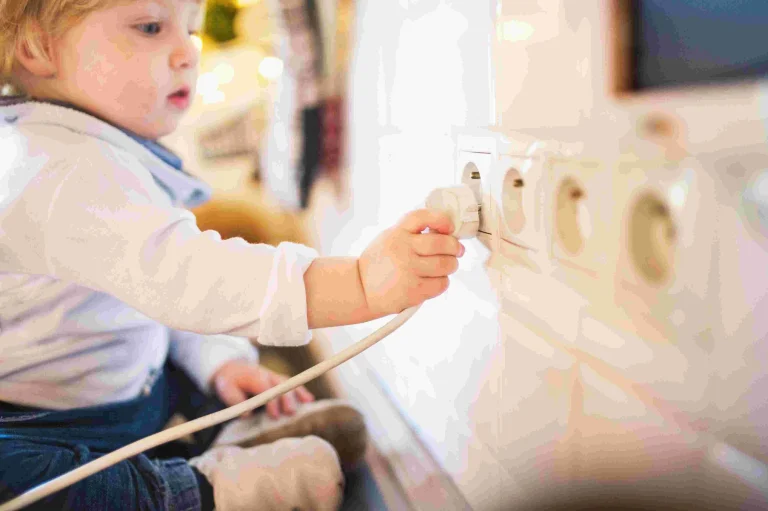
Common electrical appliances pose many dangers for children. Use the following to ensure your child’s safety.

Keep curling irons, hair dryers and radios away from water sources like the bathroom sink.
Ensure plastic safety plugs are on all unused outlets.
Keep power tools out of a child’s reach. Unplug when not in use.
Twist appliance cords around table legs to keep children from grabbing, chewing and pulling on them.
Ensure kettle, toaster, electric frying pans cords, etc., are not left dangling from counter tops.
Teach children to stay away from lawn mowers and weed trimmers.
Teach children the dangers of overhead wires. Kites should be flown in open areas only. Under no circumstances is a child to climb a power pole. Electrical substations are no place to play.
Parents and caregivers: How electrical safe is your home or dayhome? Why not take a few moments not to check it out? Your child’s safety could depend on it.

Resources

Safety Tip Cards – Handouts for parents. – childcare.net.

Airbags May Not Help Save Your Baby

Moorestown, NJ- You, an adult, are protected in a car equipped with airbags, but your smallest passenger, your baby, could be in danger.

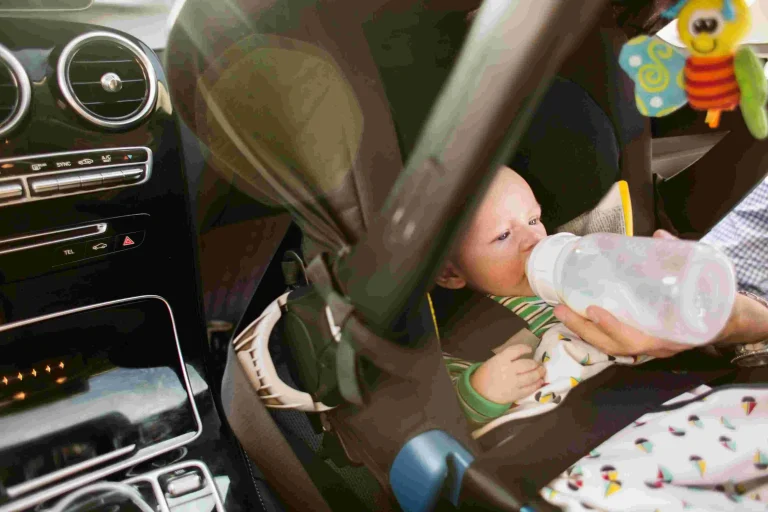
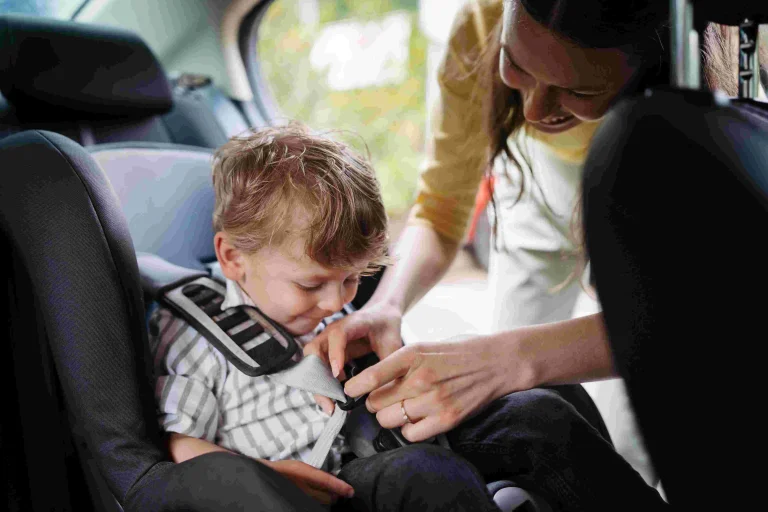
“Infants must ride semi-reclined and rear-facing, but never put a rear-facing car seat in a seat location with an airbag,” warns William MacMillan, Juvenile Products Manufacturers Association (JPMA) President. During the first week of Baby Safety Month, JMPA stresses the importance of proper car seat use and selection.

Every state in the United States requires the use of a car seat, beginning with your baby’s first ride home from the hospital. JPMA encourages parents to set a good example by making the entire family buckles up at all times

“The safest place for the baby’s car seat is the back seat,” said MacMillan. “Anchor the car seat using the adult seat belt exactly as directed by the car seat manufacturer.”

JPMA advises all parents and child care providers to beware of the use of car seats. Do not use a car seat made before 1981, one that has been involved in a crash or one that is missing the manufacturer’s label.

For More Information

For free information on safe use and selection of juvenile products, send a stamped, self-addressed, business-size envelope to: JPMA Safety Brochure, 236 Route 38 West, Suite 100, Moorestown, NJ 08057

JPMA sponsors Baby Safety Month each September to help educate parents and other child care givers on the safe selection and use of all baby products.

The JPMA is a national trade organization of more than 250 companies in the United States and Canada. These companies manufacture and/or import infant products such as cribs, care seats, bedding and a wide ranges of accessories and decorative items.

Fire Safety

Stop, Drop and Roll

All children should practice the Stop, Drp and Roll techniques that could possibly save their life in the event their clothes catch fire.
STOP immediately where you are.
DROP to the ground.
ROLL over and over and over, covering your face and mouth with your hands (this will prevent
flames from burning your face and smoke from entering your lungs). Roll over and over
until the flames are extinguished.
COOL the burn with cool water for 10-15 minutes. Get help from a grown-up, and if needed,
see a doctor.

Fire Escape Plan

The best way to plan your escape route is to make a drawing of your home, marking each room, window, door and stairwell. Using arrows, mark at least two exits from each room.

It is vitally important you practice your escape routes regularly, that you know them by heart. Your provider should have frequent fire drills with the children and should be teaching them to understand what it means when the smoke detector goes off and what they are to do when they hear it. She, like you, should let the children hear the sound it makes so they know when to take action.

Teaching Children Fire Safety

There are a number of things you and your provider can do together to teach your child about fire safety. You can:

* teach them how to STOP, DROP and ROLL if their clothing catches fire, by having them place their arms at their sides, drop to the ground, then rolling until the fire is out. Younger kids may need your help learning this technique;
* borrow books from your library that explain fire safety. Your librarian can help (see the Resource section);
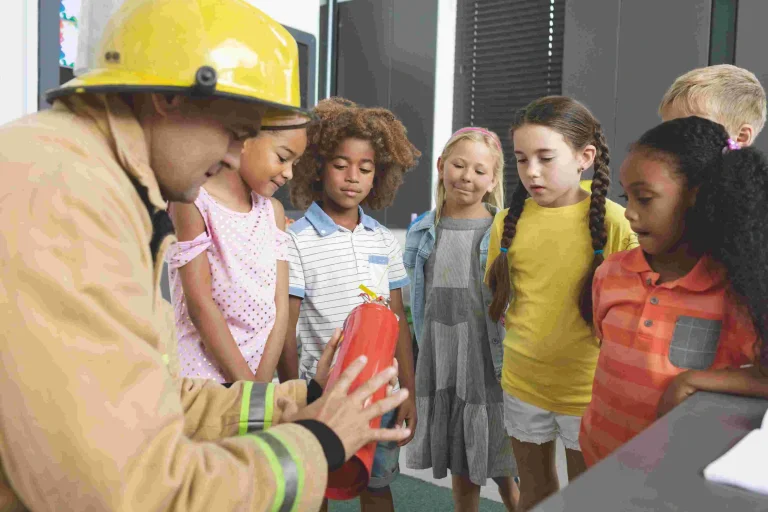
* arrange for the children to visit the local fire hall and if possible, for a fire fighter to visit with them in their centre or home, to teach them how to crawl to safety, and that fire fighters are their friends;
* show them where to go once they are outside of the building, i.e., your designated safe spot where you can find them;
* teach them to alert an adult if they see smoke or fire;
* tell them they are never to go back inside a burning building for any reason like getting their doll or pet.

Fire Prevention

Saving lives begins by preventing fires. Use the following checklist to ensure your home and the daycare center or home is fire safe.

* fire evacuation plans are clearly posted in each room;
* all matches, lighters and flammable substances are locked up;
* exit passageways are clear at all times;
* smoke detectors and fire extinguishers are functioning properly;
* all staff members know how to use fire extinguishers properly;
* electrical plugs and extension cords are not overloaded;
* curtains, blankets and/or bedspreads are not close to heat sources such as the stove, space heater, radiators, heat vents, or the fireplace;
* home or building is free of flammable debris such as oily rags, gas containers, stacks of old newspapers;
* heating systems are checked regularly and portable heaters are used according to manufacturer instructions and are not within a child’s grasp;
* facility is inspected yearly by the local fire marshall.

“How much you know is not as important as what you do with what you know.” Talk to your provider and work together on a fire prevention plan that could save your child’s life.

Child Pedestrian Injury

As spring arrives so does the urge to get outside and enjoy the great outdoors. That means taking the kids for walks around the block or to the local park to burn off some steam. But as you take the kids out, remember that traffic injuries are the leading cause of death and a major factor in the hospitalization of children under the age of 14. Many of these injuries result from children getting hit by vehicles.

Here are some interesting facts:

* Boys are injured as pedestrians nearly twice as often as girls.
* Lower income children are at greater risk.
* Children under the age of 9 show little awareness of the dangers of crossing the road. Young children are unable to determine when it is safe to cross the street because they have not yet developed the abilities to do so.

Did you know…

* Injuries are most likely to occur during the evening rush hour from 3:00 to 7:00 p.m.
* Areas with high traffic volumes, higher than average speeds, and fewer crossing signals put children at increased risk.
* Studies have found that more than half of the pedestrian injuries to children under 9 years of age result from children darting out into the street without warning.
* Fatigue and lack of attention increase the risk of children suffering a pedestrian injury on the way home from school.

Preventing Pedestrian Injuries

Here are some simple tips that’ll keep your children and the children in your care safe from harm.

* Children under 9 should always be accompanied by alert adults when crossing the street.
* Teach children to look left, right, then left again before stepping out into the street. Children should only proceed when there are no oncoming cars in either direction.
* Children should always walk on the sidewalk. If there are no sidewalks, pedestrians should walk facing traffic.
* Teach children to recognize pedestrian crossing signals. Remind them to continue across if the light changes to “Don’t Walk” while they are in the crosswalk.
* Drivers need to always be alert for children and adhere to speed limits.